Can You Refuse a Police Breathalyzer Test?

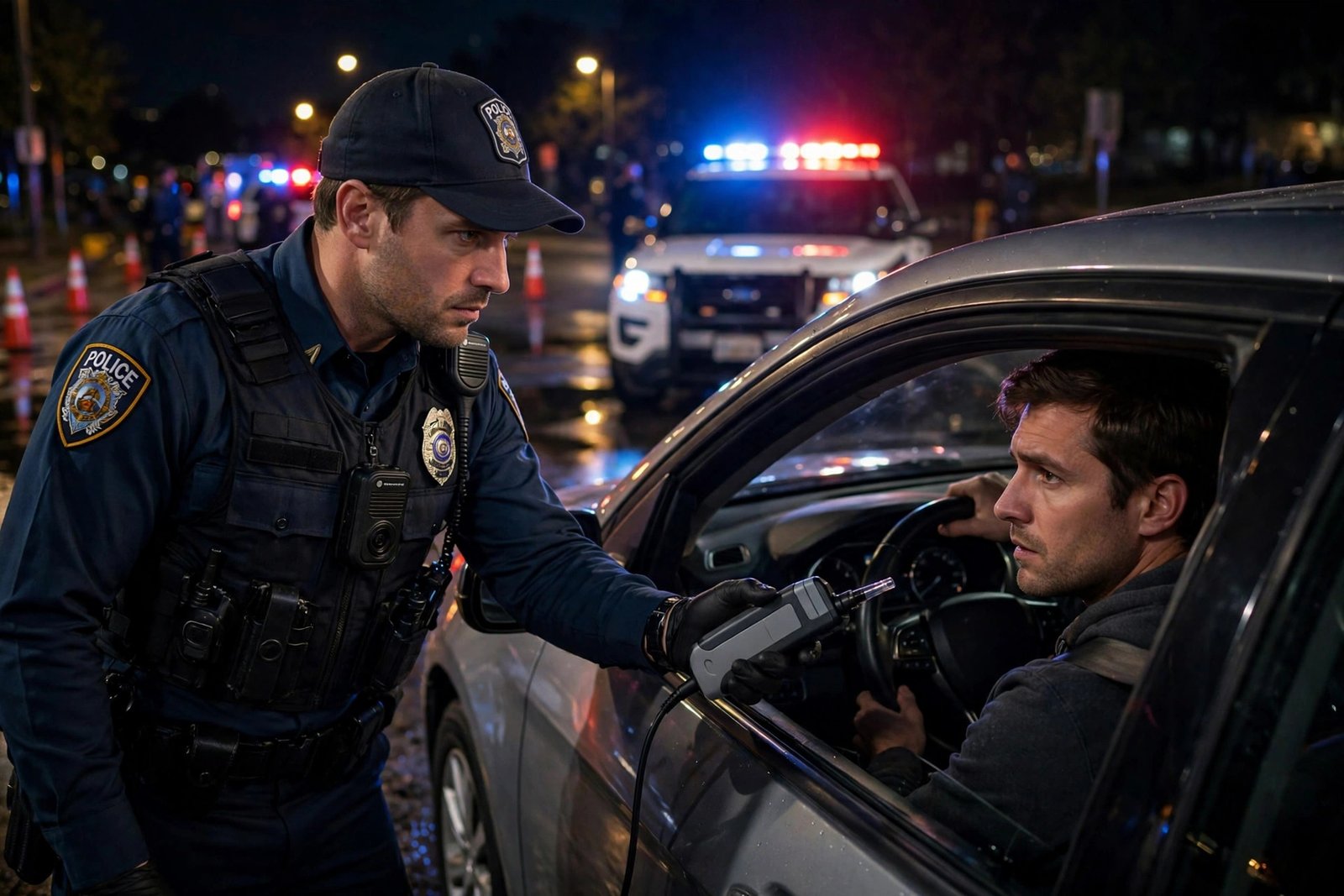
Yes, you can physically refuse a breathalyzer test — no officer can force you to blow into the device at the roadside. But in nearly every state, refusing triggers automatic penalties under “implied consent” laws, most commonly a driver’s license suspension that happens even if you are never convicted of DUI.
Whether refusal helps or hurts you depends on the type of test, your state’s laws, and the circumstances of the stop. Here’s how it all works.
Not All “Breathalyzer” Tests Are the Same
When people say “breathalyzer,” they usually mean one of three very different tests, and the refusal rules are different for each:
1. Field sobriety tests (FSTs). These are the physical exercises — walk-and-turn, one-leg stand, horizontal gaze nystagmus (following a pen with your eyes). In most states these are voluntary, and you can decline them without a direct penalty. Officers use your performance (or refusal) as part of their decision to arrest you, though.
2. Preliminary breath test (PBT). This is the small handheld device used at the roadside before an arrest. In many states, refusing the PBT carries no implied-consent penalty — but in some states it does. The result is usually only used to establish probable cause for an arrest, not as evidence at trial.
3. Evidentiary chemical test. This is the official test given after an arrest — a larger breathalyzer machine at the station, or a blood or urine test. This is the test that implied consent laws apply to. Refusing this one is what triggers automatic license suspension in most states.
Knowing which test you’re being asked to take is the single most important detail in a refusal situation.
Implied Consent Laws Explained
Every state has some form of implied consent law. The basic idea: by driving on public roads, you automatically “consent” in advance to chemical testing if an officer has probable cause to believe you’re driving under the influence.
Key points about implied consent:
- It only kicks in after a lawful DUI arrest (with a few exceptions, like accidents involving serious injury or death in some states).
- The officer must usually inform you of the consequences of refusal.
- The penalties are administrative — they come from the DMV or licensing agency, not the criminal court.
- You can still challenge the suspension at an administrative hearing, but strict deadlines apply (often 7–15 days).
Administrative Penalties: License Suspension
Refusing the evidentiary chemical test typically results in an automatic driver’s license suspension, separate from any criminal case:
- First refusal: commonly 6 months to 1 year of suspension, depending on the state.
- Second or subsequent refusals: often 18 months to 3 years, and in some states a lifetime revocation after multiple refusals.
- These suspensions apply even if the DUI charge is later dropped or you are acquitted — the refusal penalty is independent of the criminal case.
- Many states also impose ignition interlock device requirements or restricted “hardship” licenses with additional fees.
Because this is an administrative action, the standard of proof is lower than in criminal court, and the suspension can begin within days or weeks of the stop.
Criminal Penalties for Refusal
On top of license suspension, many states add criminal consequences for refusing:
- In about a dozen states, refusal itself is a separate criminal offense or an enhancer that increases DUI penalties.
- Prosecutors in most states are allowed to tell the jury you refused, and to argue that refusal suggests consciousness of guilt.
- Some states impose mandatory jail time or higher fines when a DUI conviction follows a refusal.
- A few states allow officers to seek a warrant for a forced blood draw after a refusal — meaning your blood can be taken anyway, and the refusal penalties still apply.
How Refusal Rules Vary by State
Laws differ significantly, so the state you’re driving in matters enormously. A few examples:
- California: First refusal brings a 1-year license suspension through the DMV, plus the refusal can be used against you in court. A second refusal within 10 years means a 2-year revocation.
- Texas: Refusal triggers a 180-day license suspension for a first offense (up to 2 years for repeat offenses). Texas officers frequently seek warrants for blood draws after refusals under the state’s “no refusal” programs.
- Florida: A first refusal means a 1-year license suspension; a second refusal is a misdemeanor crime in itself and brings an 18-month suspension.
- New York: Refusal leads to a 1-year license revocation and a civil penalty fine (currently $500 for a first refusal), decided at a DMV hearing.
- Arizona: Under Arizona’s strict implied consent law, a first refusal brings a 12-month suspension, and officers can quickly obtain warrants for blood draws.
These examples change as legislatures update laws, so always verify current rules for your state.
What Happens During a DUI Stop: Step by Step
- The officer observes driving behavior or another reason for the stop and begins an investigation.
- You may be asked to perform field sobriety tests (generally voluntary).
- You may be asked to take a roadside preliminary breath test (refusal rules vary by state).
- If the officer develops probable cause, you are arrested for DUI.
- After arrest, you are asked to submit to an evidentiary chemical test — this is where implied consent and refusal penalties apply.
- If you refuse, the officer documents the refusal and the DMV suspension process begins.
Key Takeaways
- You can physically refuse any breath test, but the evidentiary test after arrest is the one with serious automatic penalties.
- Implied consent means driving equals advance agreement to post-arrest chemical testing.
- Refusal penalties (usually license suspension) apply independently of the criminal DUI case.
- Roadside tests and the official station test follow different rules — know which is which.
- State laws vary widely; a strategy that makes sense in one state may backfire in another.
Frequently Asked Questions
Can police force me to take a breathalyzer? At the roadside, no. After an arrest, officers in many states can get a warrant from a judge for a blood draw, which can then be taken with reasonable force if necessary — but they cannot physically force you to blow into a breath device.
Is it better to refuse or take the test? There is no universal answer. Refusal brings near-certain license suspension; taking the test may provide evidence for a conviction. The right call depends on your state’s specific penalties, your driving record, and the circumstances. This is general information, not advice for your situation.
Can I change my mind after refusing? Some states allow you to “cure” a refusal by agreeing to test within a short window (sometimes 20 minutes or so), but many do not — once you refuse, the refusal stands. Don’t count on a second chance.
Does refusal show up on my record? The administrative suspension appears on your driving record. Whether refusal itself appears on a criminal record depends on whether your state criminalizes refusal separately.
What if I wasn’t actually driving? Implied consent applies to operating or being in actual physical control of a vehicle, which courts interpret broadly (for example, sitting in the driver’s seat with the engine running). The definition varies by state.
Do implied consent laws apply to drugs as well as alcohol? Yes. Chemical tests can screen for drugs, and refusal penalties apply the same way in DUI-drug investigations.
This article is for general information only and is not legal advice.