
Can Police Search Your Phone Without a Warrant?

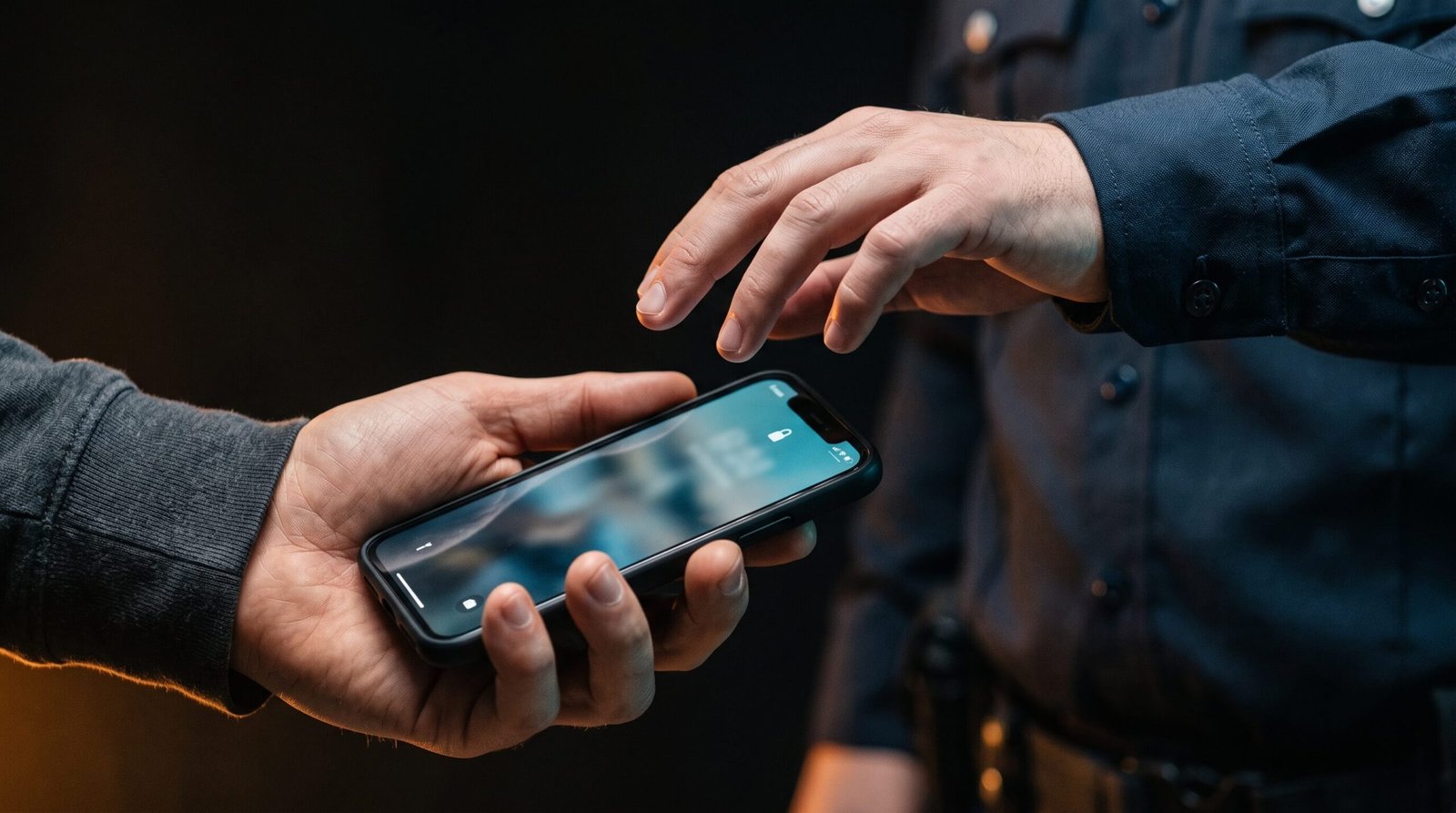
Short answer: No — in almost every situation, police need a warrant before they can look through your phone. This wasn’t always true, but a Supreme Court decision changed the rules for good. Below, we’ll break down exactly when police need a warrant, when they don’t, and what you can do if an officer asks to search your phone.
Think of Your Phone Like a Locked Diary
Here’s an easy way to picture it. Imagine you have a locked diary at home with your private thoughts, photos, and letters inside. For someone to read it, they’d normally need your permission — or a judge would need to say it’s okay first.
Your phone works the same way under the law. It’s not just a “thing” police can flip through like a wallet or a bag. It holds years of texts, photos, location history, and personal accounts — so courts treat it like that locked diary. Police generally need a judge’s permission (a warrant) before they can open it up and look inside.
The Case That Changed Everything: Riley v. California
For a long time, it wasn’t clear whether this rule applied to phones. Police could normally search things you were carrying if they arrested you — like your pockets or your bag — without needing a separate warrant for each item. Some police departments argued a phone should work the same way.
That question reached the U.S. Supreme Court in Riley v. California (2014). A man named David Riley was arrested during a traffic stop, and an officer went through the photos and videos on his phone without a warrant, which led to additional charges against him.
The Supreme Court disagreed with that approach. In a unanimous decision, the Court ruled that a cell phone is different from a wallet or a pack of cigarettes — because it can hold an enormous amount of private information all in one place. The justices decided that police must get a warrant before digging through the data on someone’s phone, even if that person has just been arrested.
That ruling still stands today and applies across the entire United States.
When Police CANNOT Search Your Phone Without a Warrant
- During a traffic stop — even if they pull you over
- After an arrest — even though they can take and hold your phone
- If your phone is just sitting in your car or bag during a search
- Just because they suspect you have something illegal on it
In all of these situations, they need to go to a judge, explain why they believe there’s evidence of a crime on your phone, and get a signed warrant first.
When Police CAN Search Your Phone Without a Warrant
There are a handful of real exceptions. Here’s a simple breakdown:
| Situation | Warrant Needed? | Why |
|---|---|---|
| You say “yes” and give consent | No | You gave up your own privacy protection voluntarily |
| A true emergency (exigent circumstances) — like a kidnapping in progress or a bomb threat | No | Courts allow it when waiting for a warrant could cost a life or let evidence disappear |
| You’re on probation or parole with a signed agreement allowing phone checks | Sometimes | Some supervision agreements reduce privacy rights as a condition of release |
| Crossing an international border (airports, border crossings) | Often no | Courts have historically given border agents wider search powers, though this is still debated and evolving |
| Officer has a signed search warrant from a judge | N/A — this is the warrant | This is the standard, lawful way to search a phone |
Outside of these situations, a warrantless search of your phone’s contents is generally not allowed.
“But They Took My Phone When They Arrested Me — Doesn’t That Mean They Can Search It?”
No. This is one of the most common misunderstandings. Police can take your phone and hold onto it as part of an arrest, mostly to keep it safe or to make sure you don’t delete anything. But holding the phone is different from searching it. To actually open it and look through your messages, photos, or apps, they still need a warrant (or one of the exceptions above).
Sometimes officers will place a seized phone in a special signal-blocking pouch (called a Faraday bag) so nobody can remotely wipe or lock it while they wait for a warrant.
What About Fingerprint or Face Unlock?
This part of the law is still developing, and it depends on where you live, so treat this as general background rather than a fixed rule:
- Courts have generally treated typed passcodes as protected, because giving one up can be seen as revealing what’s “in your mind,” similar to answering a question — something the Fifth Amendment protects you from being forced to do.
- Fingerprints and face scans have sometimes been treated differently by courts, since they’re more like physical evidence (similar to giving a fingerprint at booking) rather than spoken information.
Because courts across different states haven’t all agreed on this, it’s one of the more unsettled areas of phone privacy law.
What Should You Do If Police Ask to Search Your Phone?
- You’re allowed to say no. You can calmly say, “I don’t consent to a search of my phone.”
- You don’t have to give your passcode. Saying no doesn’t mean you’re hiding something — it means you’re exercising a right.
- Staying calm and polite matters. Refusing a search is legal, but how you say it can affect how the interaction goes.
- If they search anyway without a warrant or your consent, a lawyer can later argue in court that the evidence should be thrown out, since it was collected illegally.
Quick Recap
| Question | Answer |
|---|---|
| Do police need a warrant to search my phone? | Yes, in almost all situations |
| Can they take my phone during an arrest? | Yes, but taking it isn’t the same as searching it |
| Can I refuse to unlock my phone? | Yes, you can refuse |
| Are there exceptions? | Yes — consent, true emergencies, probation terms, and border crossings |
| Does this apply everywhere in the U.S.? | Yes, since Riley v. California (2014) applies nationwide |
Phones hold more personal information than almost anything else we own, and the law has caught up to that reality. Unless you agree to it, or a real emergency is happening, police need a judge’s sign-off before they can search what’s on your phone.
This article is for general information purposes only and isn’t a substitute for legal advice. If you’re dealing with a specific situation involving your phone and police, it’s best to speak with a licensed attorney in your state.







2 Comments