Can Police Officers Smoke Weed Off Duty?

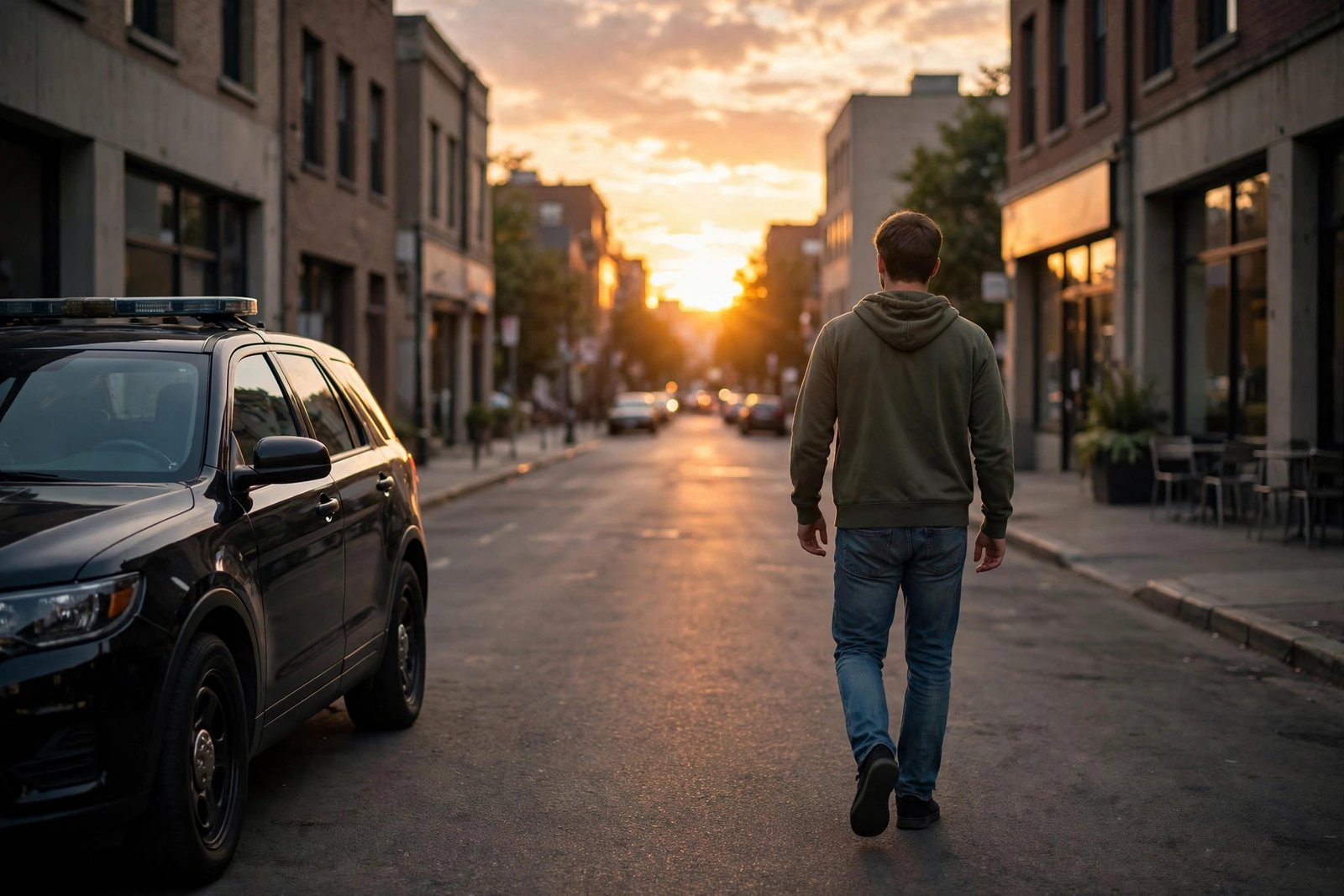
Can police officers smoke weed off duty? In almost every department in America, the answer is no — even in states where recreational marijuana is fully legal, and even when the officer is off the clock. Marijuana remains illegal under federal law, and virtually all law enforcement agencies prohibit sworn officers from using it, with violations typically ending careers.
This surprises a lot of people. If weed is legal in your state, why can’t the officer who lives next door partake on a Saturday night? The answer is a tangle of federal law, firearms regulations, department policy, and the unique legal position police occupy. Here is the full picture.
Federal Law vs. State Legalization
The core conflict is simple: marijuana remains a Schedule I controlled substance under federal law, in the same category as heroin — meaning the federal government officially considers it to have no accepted medical use and a high potential for abuse. More than half the states have legalized recreational use, but federal law has not changed, and federal law governs in several ways that directly hit police officers:
- Federal funding. Most departments receive federal grants and participate in federal task forces. Employing officers who violate federal drug law jeopardizes that funding and those partnerships.
- Firearms. Under federal law (18 U.S.C. § 922(g)(3)), an “unlawful user” of marijuana may not possess firearms. ATF guidance has explicitly stated that state legalization does not change this. A police officer who cannot lawfully carry a gun cannot do the job.
- Court credibility. Officers testify in drug cases constantly. An officer who uses marijuana hands every defense attorney a ready-made attack on their credibility.
So even the most cannabis-friendly state cannot shield an officer from the federal consequences — and departments write their policies accordingly.
Department Policies: Zero Tolerance Is the Norm
Nearly every police department in the United States has a written policy prohibiting marijuana use by sworn officers, on or off duty. These policies typically:
- Ban all use of marijuana, including medical marijuana with a valid state card
- Apply 24/7 — “off duty” is not an exception
- Cover all forms: smoking, edibles, vapes, and often CBD products (which can trigger positive tests due to trace THC)
- Treat a violation as a fireable offense, often on the first offense
Some departments go further and prohibit officers from working in or investing in the cannabis industry, entering dispensaries except on official business, or even being present where marijuana is being used.
A handful of agencies in legal states have begun quietly discussing whether these policies could evolve, but as of now, outright permission for sworn officers to use marijuana is essentially nonexistent in American policing.
Drug Testing: How Departments Enforce the Ban
Policies are backed by testing regimes that make violations hard to hide:
- Pre-employment screening — every applicant is tested, and admitted recent use is disqualifying
- Random testing — many departments test officers without warning throughout their careers
- Reasonable-suspicion testing — supervisors can order a test based on observed behavior
- Post-incident testing — after shootings, serious crashes, or major uses of force
A confirmed positive typically means termination, and in many states the officer’s POST certification (the license required to work as a peace officer) can be suspended or revoked — ending not just the current job but the career. Some states also allow pension forfeiture for drug-related misconduct.
What About Applicants? The Rules Are Loosening There
There is an important distinction between current officers and applicants. While use by sworn officers remains broadly banned, hiring standards for past use have relaxed considerably:
- Departments that once imposed lifetime bans for any marijuana use have largely moved to time-based rules — commonly requiring 1–3 years of abstinence before applying
- The FBI historically required 3 years since last marijuana use for applicants (with stricter rules for other drugs), and has adjusted its policies over time to widen the applicant pool
- Some large city departments in legal states have shortened abstinence windows or stopped asking about long-ago experimental use
The trend is clear: agencies want the staffing, so they are more forgiving of an applicant’s past — but they still demand complete abstinence once you put on the badge.
Federal Law Enforcement: Even Stricter
If anything, federal agencies are tougher than local departments. The FBI, DEA, ATF, and Secret Service all prohibit marijuana use by employees and agents, including in legal states. Federal polygraph examinations routinely ask about drug history, and dishonesty about it is itself disqualifying. For federal officers, there is no state-legalization argument at all — they work directly for the government that classifies marijuana as Schedule I.
Are Policies Evolving?
Slowly, and mostly at the margins. A few developments worth watching:
- Some departments have stopped automatically disqualifying applicants for past use, treating it like youthful experimentation
- Police unions in a few legal states have raised the question in contract negotiations
- Public opinion has shifted dramatically, creating political pressure
But the structural barriers — federal scheduling, the firearms prohibition, grant compliance, and courtroom credibility — mean that permission for active-duty officers to use marijuana is not on the near horizon anywhere in the U.S. Until federal law changes, the badge and the bud remain incompatible.
Key Takeaways
- Police officers are generally prohibited from using marijuana on or off duty, even in states where it is legal.
- Marijuana remains a Schedule I drug under federal law, which drives department policies nationwide.
- Federal firearms law bars unlawful marijuana users from possessing guns — a career-ending problem for armed officers.
- Departments enforce bans through pre-employment, random, reasonable-suspicion, and post-incident drug testing.
- A positive test typically means termination and possible loss of police certification.
- Hiring rules for applicants’ past use have relaxed (often 1–3 years abstinence), but sworn officers must remain abstinent.
- Federal agencies like the FBI and DEA are even stricter than local departments.
Frequently Asked Questions
Can police officers smoke weed off duty in states where it’s legal? No. Virtually all departments prohibit marijuana use by sworn officers regardless of state law, because marijuana remains illegal federally and officers must comply with federal firearms and grant requirements.
What about medical marijuana with a valid card? Department policies almost universally prohibit it for sworn officers, card or not. The federal prohibition does not recognize state medical programs.
Do police get drug tested? Yes — typically before hiring, randomly during employment, when reasonable suspicion exists, and after critical incidents like shootings. A confirmed positive usually leads to termination.
Can I become a cop if I smoked weed in the past? In most cases, yes, as long as enough time has passed. Many departments now require 1–3 years of abstinence rather than lifetime bans. Be completely honest about your history — lying about it is far worse than the use itself.
Why can’t officers use marijuana if it’s legal in their state? Three main reasons: it is still illegal under federal law, federal law bars marijuana users from possessing firearms, and departments risk federal funding and officers’ courtroom credibility.
Are any departments allowing officers to use marijuana? Essentially none for sworn, on-duty officers. A few agencies have discussed it, but zero-tolerance policies remain the overwhelming national standard.
This article is for general information only and is not legal advice.