Can Police Force You to Unlock Your Phone?

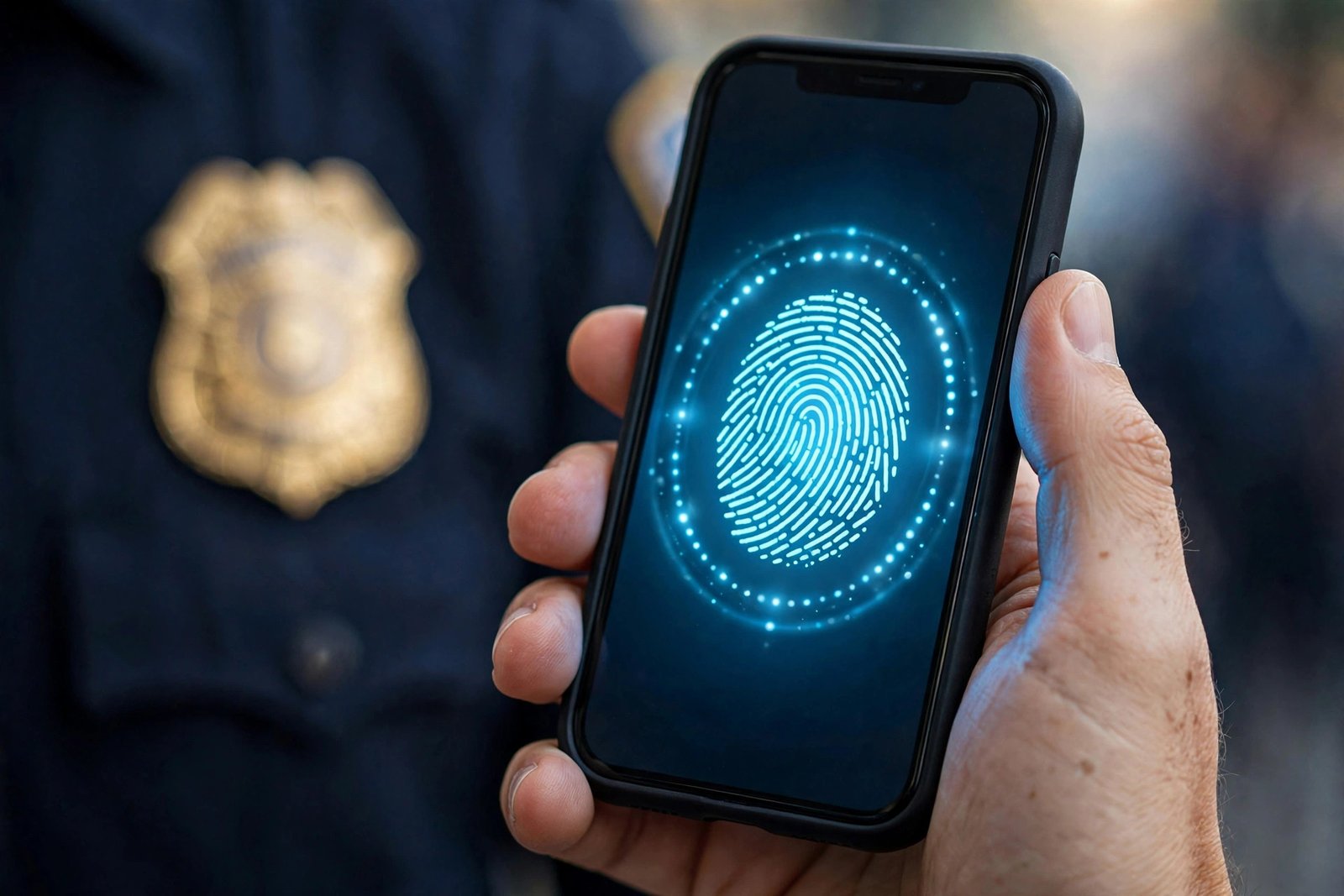
Generally, police cannot force you to tell them your passcode — the Fifth Amendment protects you from being compelled to reveal something that exists only in your mind. Biometric unlocks like Face ID or a fingerprint, however, are treated differently by many courts and receive less protection. The law is still developing and varies by state, so the details matter.
The Quick Answer
- Passcode or PIN: In most courts, forcing you to disclose your passcode would violate your Fifth Amendment right against self-incrimination.
- Face ID, fingerprint, or other biometrics: Many courts have ruled that police can compel you to unlock a phone with biometrics, treating it like providing a physical sample rather than testimony.
- The U.S. Supreme Court has not directly ruled on compelled phone unlocking, so lower courts are split and state law can change the outcome.
Why Passcodes and Biometrics Are Treated Differently
The Fifth Amendment protects you from being forced to give testimonial evidence against yourself — basically, the contents of your mind. Courts have long held that the government can compel physical characteristics (a fingerprint, a voice sample, standing in a lineup) because those aren’t testimony.
That distinction is the whole ballgame for phone unlocking:
- A passcode is testimonial. Telling police your PIN reveals knowledge stored in your mind. Under cases like Doe v. United States, compelling that kind of disclosure is generally barred.
- A fingerprint or face is physical. Courts reasoning by analogy say pressing your finger to a sensor is like giving a fingerprint at booking — a physical act, not testimony.
This is why legal experts often advise that a strong alphanumeric passcode offers more legal protection than biometric unlock, even though biometrics feel more secure day to day.
What the Courts Have Said So Far
Because the Supreme Court hasn’t settled the question, the picture comes from lower federal and state courts — and it’s mixed:
- Most courts allow compelled biometric unlocking. The majority view is that forcing a suspect to place a finger on a sensor or look at a phone does not violate the Fifth Amendment.
- A minority of courts disagree, holding that even biometric unlocking can be testimonial because it demonstrates control and ownership of the phone.
- For passcodes, courts lean toward protection. In Seo v. State (2020), the Indiana Supreme Court held that compelling a suspect to unlock her phone with a passcode violated the Fifth Amendment. Other courts have reached similar conclusions, though not all.
Bottom line: expect the rules to keep evolving, and don’t assume the law in your state matches what you read about another state.
Can a Warrant Force You to Unlock Your Phone?
This is a common point of confusion. Under Riley v. California (2014), police generally need a warrant to search the contents of your phone. But a warrant to search the phone is not the same as an order compelling you to unlock it.
- A search warrant lets police seize the phone and try to access it themselves.
- Some warrants specifically authorize officers to compel biometric unlocking (for example, holding the phone to your face) during the search.
- Even with a warrant, compelling you to state your passcode runs into the Fifth Amendment problem described above.
In short: a warrant gets police the phone, but it doesn’t automatically get them inside it.
What To Do If Police Ask You to Unlock Your Phone
- You can say no. A request is not an order. “I do not consent to a search of my phone, and I’d like to speak with a lawyer” is a complete response.
- Don’t physically resist. If officers claim authority to compel a biometric unlock, don’t fight them — comply under protest and challenge it later in court with a lawyer. Resisting can lead to separate charges.
- Disable biometrics in the moment. Both iPhone and Android let you quickly disable Face ID/fingerprint (for example, pressing the side button five times on iPhone enters a mode requiring the passcode). Doing this before an encounter removes the biometric question entirely.
- Ask if you are free to leave. If you’re detained, clearly state you are invoking your right to remain silent and want an attorney.
- Document everything. Note officers’ names, badge numbers, what was said, and whether they claimed to have a warrant. This helps your lawyer later.
Key Takeaways
- Passcodes generally receive stronger Fifth Amendment protection than biometrics.
- Many courts allow police to compel Face ID or fingerprint unlocks; most protect passcodes.
- A search warrant for your phone doesn’t automatically force you to unlock it.
- You can decline a request to unlock; never physically resist an order.
- Disabling biometrics ahead of time is the simplest protective step.
- The Supreme Court hasn’t resolved this — state law and new rulings matter.
Frequently Asked Questions
Can police unlock my phone with my face while I’m handcuffed? Some courts have permitted officers acting under a valid warrant to hold a phone to a suspect’s face. Others have not. Because the law is split, this remains one of the most contested scenarios in digital privacy law.
Is it illegal to refuse to give police my passcode? Refusing to disclose your passcode is generally an exercise of your Fifth Amendment rights, not a crime. However, never lie to officers or destroy evidence — obstruction charges are a separate and serious risk.
Does this apply at the border? Border searches follow different, broader rules. Federal agents at the border have historically claimed wider authority to inspect devices. The compelled-unlocking question at the border is even less settled — talk to a lawyer if this applies to you.
Should I just use a passcode instead of Face ID? From a purely legal standpoint, a memorized passcode currently enjoys stronger constitutional protection than biometrics in most jurisdictions. Many privacy advocates recommend disabling biometrics for that reason.
Can my employer force me to unlock a work phone? Employer-owned devices are a different situation. Your employer can generally set conditions on work devices, including requiring access. This article covers police encounters, not workplace policies.
What if police already have a warrant for my phone’s contents? They may search the phone if they can access it, but compelling you to provide the passcode still raises Fifth Amendment issues. A lawyer can challenge how any evidence was obtained.
This article is for general information only and is not legal advice.