What Is a Police Welfare Check?

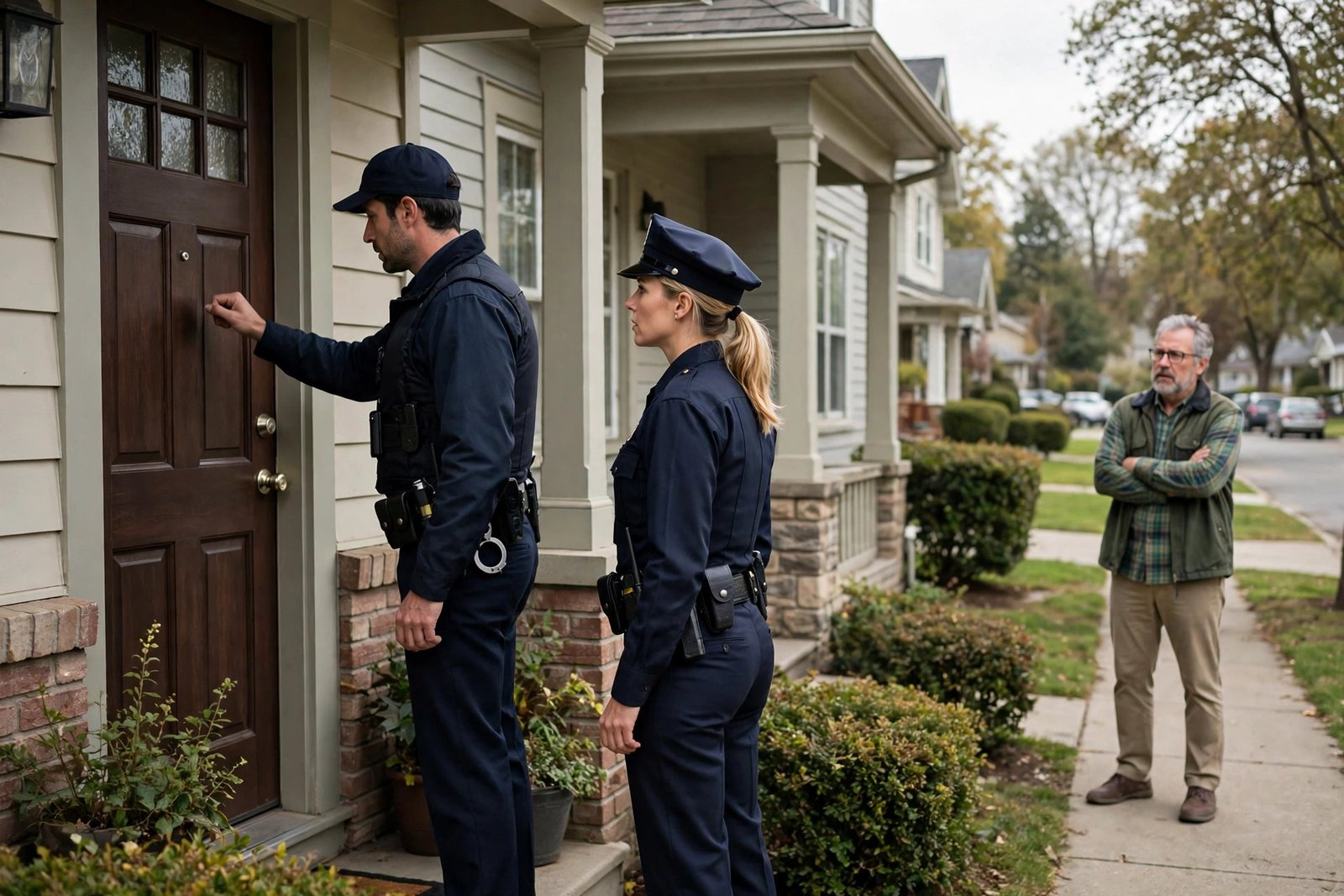
A police welfare check (also called a wellness check) is when officers visit someone’s home — at another person’s request — to confirm that the person is safe. If a loved one, neighbor, or coworker has gone silent and you are worried something may have happened, a welfare check is the standard way to ask police to go take a look.
Welfare checks are among the most common non-emergency calls departments receive. They sit in a unique space: the person being checked has not asked for help and may not even know police are coming, so officers must balance genuine concern against that person’s privacy and rights. Here is how the process works from request to resolution.
Who Can Request a Welfare Check — and How
Anyone can request one. There is no requirement that you be a relative. Common requesters include:
- Family members who cannot reach a parent, child, or sibling
- Friends worried after alarming messages or sudden silence
- Neighbors who notice mail piling up, newspapers stacking, or unusual quiet
- Employers when an employee misses work without explanation
- Landlords concerned about a tenant
How to request it:
- Call the non-emergency line, not 911 — unless you believe there is an immediate emergency (you heard a scream, saw something alarming), in which case call 911.
- Provide the essentials: the person’s full name, exact address, physical description, age, and any medical or mental-health conditions you know about.
- Explain why you are concerned: “My 78-year-old mother always answers her phone and hasn’t picked up in two days” is far more useful than “I just want someone to check.”
- Give your contact information so officers can reach you with questions or an update.
- Mention access details if you know them — gate codes, apartment numbers, or a spare-key location.
You can generally request a check anonymously, though providing your information helps officers assess credibility and follow up.
What Officers Do During a Welfare Check
Officers approach welfare checks as a safety task, not a criminal investigation. A typical check goes like this:
- Knock and announce. Officers knock on the door, ring the bell, and announce themselves clearly — often multiple times over several minutes.
- Try every reasonable contact method. They may call the person’s phone number if you provided it, check with neighbors, look through windows from lawful vantage points, and walk around the property listening for signs of life or distress.
- Assess the scene. Officers look for indicators: cars in the driveway, lights on, mail accumulated, signs of forced entry, or anything suggesting a medical emergency.
- Talk to people nearby. Neighbors, building managers, or family members on scene can provide context — “she’s probably at her sister’s” resolves many checks quickly.
If officers make contact and the person is fine, that is usually the end of it. The person is under no obligation to explain themselves to you through the police, and officers will generally just confirm to the requester that the individual is okay — with limited details, out of respect for privacy.
What Happens If No One Answers?
This is where the limits kick in. Police cannot force entry into a home on a hunch alone. The Fourth Amendment protects against unreasonable searches, and entering someone’s home is the most serious intrusion there is.
Officers can enter without a warrant or consent only under established exceptions:
- Exigent circumstances — a genuine, immediate emergency: cries for help, sounds of a struggle, visible signs of a medical crisis through a window, a gas leak, or similar
- Consent — someone with authority over the home (a roommate, spouse, or landlord in some situations) allows entry
- Community caretaking in some jurisdictions, though courts have narrowed this doctrine for homes after Caniglia v. Strom (2021), where the Supreme Court rejected a broad “community caretaking” exception for warrantless home entries
In practice, this means: no answer + no signs of distress = officers leave, document the attempt, and tell you what they found. They may suggest you keep trying or try alternative contacts. They will not kick in a door because someone did not answer the phone.
The Limits of What Police Can Do
It helps to have realistic expectations:
- They cannot search the home. A welfare check is not a search warrant. Officers cannot go through belongings or open closed spaces without separate legal justification.
- They cannot detain a competent adult. If the person answers, seems fine, and wants to be left alone, officers will leave — even if you remain worried.
- They cannot share private details. Officers will confirm the person is safe but generally will not relay personal health information or the person’s whereabouts to you without permission.
- They cannot force someone to contact you. Strained family relationships are not a police matter.
- False or harassing requests have consequences. Repeatedly requesting checks to harass someone — an ex-partner, a neighbor you dislike — can lead to charges for misuse of emergency services.
When to Request One — and Alternatives to Consider
Request a welfare check when:
- Someone vulnerable (elderly, ill, living alone) is unexpectedly unreachable
- You have specific reason for alarm — missed medication, a concerning message, known health risks
- Normal channels (calling, texting, asking a neighbor) have failed
Consider alternatives first when the situation is less urgent:
- Keep calling and texting. People miss calls for ordinary reasons — dead phones, naps, travel.
- Ask someone nearby. A neighbor or nearby friend can knock faster than dispatch can.
- Contact the building manager or landlord, who may have a key and existing relationship with the tenant.
- For mental-health concerns, call or text 988. The Suicide and Crisis Lifeline can help assess the situation and, if needed, coordinate an appropriate response — sometimes a better fit than a police visit.
- In genuine emergencies — you witness a collapse, hear screaming, see smoke — skip all of this and call 911.
Key Takeaways
- A welfare check is a police visit to confirm someone’s safety at another person’s request.
- Anyone can request one — family, friends, neighbors, employers — usually via the non-emergency line.
- Provide the person’s name, address, description, reason for concern, and your contact info.
- Officers knock, announce, try to make contact, and observe from lawful vantage points.
- Police cannot force entry without consent, a warrant, or true exigent circumstances like cries for help.
- If the person is fine and wants privacy, officers will leave — they cannot compel contact.
- Try calling, texting, or asking a neighbor first; use 988 for mental-health crises and 911 for true emergencies.
Frequently Asked Questions
Who can request a police welfare check? Anyone — you do not need to be a relative. Family members, friends, neighbors, coworkers, employers, and landlords all commonly request them.
How do I request a welfare check? Call your local police non-emergency number (use 911 only if you believe there is an immediate emergency). Provide the person’s name, address, description, why you are concerned, and your callback number.
Can police enter the home during a welfare check? Not without consent, a warrant, or exigent circumstances — such as hearing cries for help or seeing clear signs of a medical emergency. After Caniglia v. Strom (2021), courts are strict about warrantless home entries. No answer alone is not enough.
What happens if the person doesn’t answer the door? Officers will try knocking multiple times, attempt phone contact, speak with neighbors, and look for signs of distress from outside. If nothing indicates an emergency, they document the attempt and leave.
Will the police tell me what they found? Generally they will confirm whether the person is safe, but they will not share private personal or health details without the person’s permission.
Is there a cost for a welfare check? No. Welfare checks are a standard public service and are free to request. However, deliberately false or harassing requests can result in criminal charges.
This article is for general information only and is not legal advice.