Can You Legally Film a Police Officer?

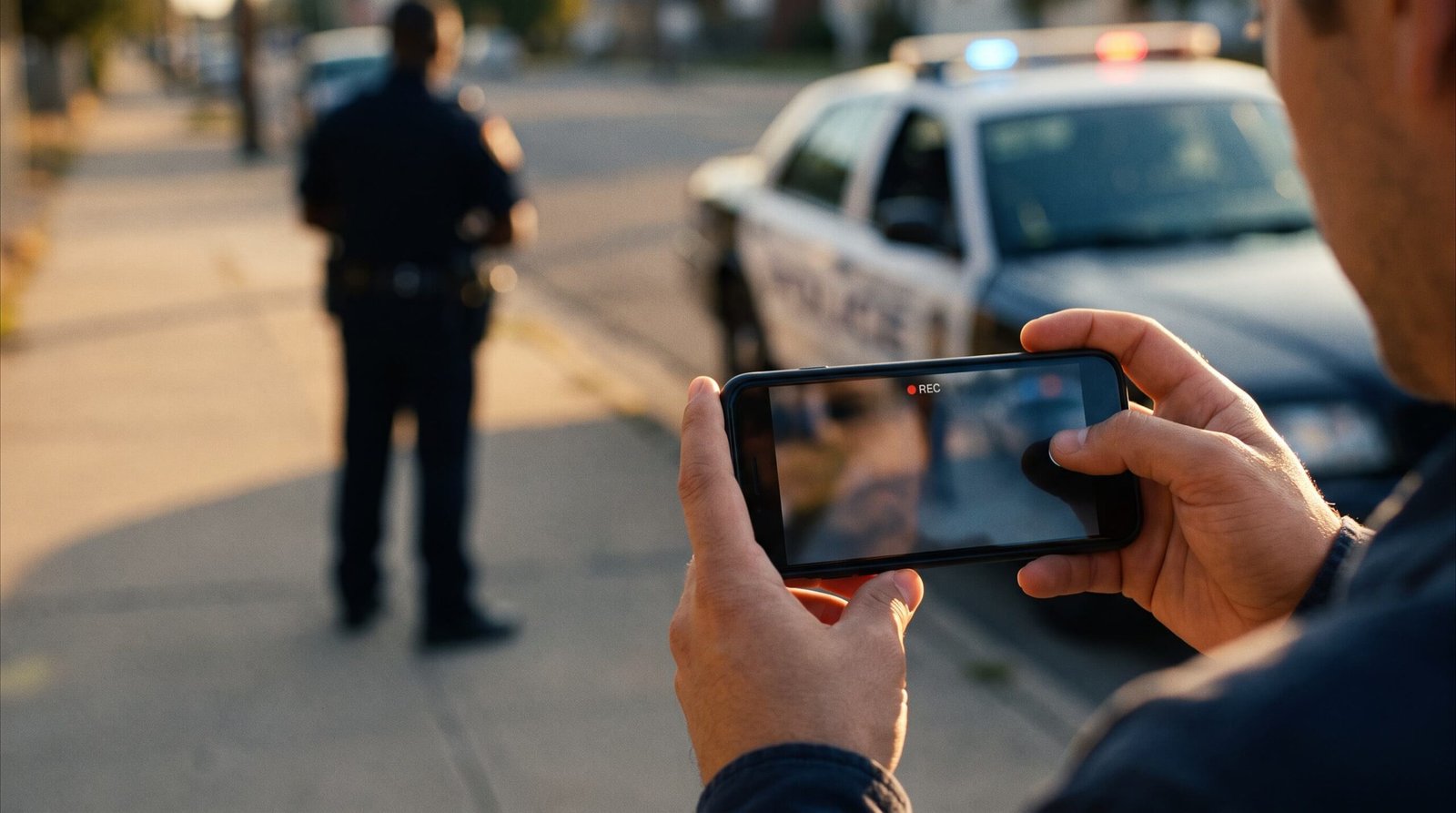
Yes — in the United States, you have a constitutional right to record police officers doing their job in a public place. This isn’t a gray area or a loophole; it’s a right that federal courts across the country have repeatedly confirmed. That said, “yes” comes with a few real conditions worth understanding before you hit record.
Where This Right Actually Comes From
This right traces back to the First Amendment’s protection of free speech and freedom of the press — and courts have said that gathering information about public officials, including filming them, falls under that protection.
The case that really put this on the map was Glik v. Cunniffe in 2011. A man named Simon Glik was arrested in Boston for filming police officers making an arrest on the Boston Common. The First Circuit Court of Appeals ruled that his arrest was unconstitutional, and the city ended up paying him a $170,000 settlement.
Since then, multiple federal appeals courts — including the First, Third, Fifth, Seventh, Ninth, Tenth, and Eleventh Circuits — have all reached the same conclusion in separate cases: recording on-duty police in public is protected activity, and officers can’t arrest you, confiscate your device, or delete your footage just because you’re recording.
What You’re Allowed to Do
- Record video or audio of police officers performing their duties in a public place
- Record from a public sidewalk, street, or park
- Keep recording even during an arrest or traffic stop, as long as you’re not interfering
- Refuse an order to delete your footage
- Refuse to hand over your phone unless officers have a warrant, or are lawfully arresting you and seizing it as part of that arrest
What You’re NOT Allowed to Do
| Action | Protected? |
|---|---|
| Standing on a public sidewalk filming an arrest | Yes |
| Recording from a reasonable distance without blocking officers | Yes |
| Physically walking between an officer and a suspect to get a better shot | No |
| Ignoring a lawful order to step back for safety reasons | No |
| Trespassing on private property to get closer footage | No |
| Refusing to stop recording just because an officer feels uncomfortable | Yes, still protected |
The general legal test isn’t about how close you are — it’s about whether you’re actually interfering with what officers are doing. Simply being visible, filming, or asking questions is not interference.
Do You Need the Officer’s Consent to Record Audio?
Some states require all parties to a private conversation to consent before it’s recorded. This causes confusion, but courts have generally ruled these laws don’t apply here — an on-duty officer performing public duties in public isn’t having a “private conversation,” so recording audio of that interaction is treated the same as recording video.
The Rise of “Buffer Zone” Laws — And Why They Keep Getting Challenged
In the past few years, several states have passed laws requiring bystanders to stay a set distance away from police activity, sometimes even when recording. These laws are being actively fought in court, and the outcomes have been mixed:
| State | Buffer Distance | Status (2026) |
|---|---|---|
| Indiana | 25 feet | Ruled unenforceable — a federal appeals court found it too vague in 2025 |
| Arizona | 8 feet | Blocked; the state’s own attorney general acknowledged it violated the First Amendment |
| Florida | 25 feet | In effect since 2025; constitutionality still being challenged in court |
| Tennessee | 25 feet | Currently in effect while a lawsuit challenging it continues |
The pattern so far: courts are skeptical of any fixed-distance law, since a specific number of feet doesn’t account for the situation on the ground. Instead, most courts prefer the older, flexible standard — are you actually interfering, or just present?
Can Police Take Your Phone?
They can seize your phone as part of a lawful arrest, or under a warrant or subpoena. But seizing it and searching it are two different things. Just like with any other phone search, officers generally need a separate warrant before they can go through your photos or delete anything — a rule that comes from the Supreme Court’s 2014 decision in Riley v. California.
If an Officer Tells You to Stop Recording
- Stay calm and keep recording if it’s safe to do so
- Clearly state that you’re on public property and exercising your right to record
- Don’t argue or escalate — you can address any violation afterward, including through a complaint or a lawyer
- Step back if asked, especially if there’s a specific safety reason, but you don’t have to stop filming from a safe distance
- Never physically resist an officer, even if you believe they’re wrong
The Short Version
| Question | Answer |
|---|---|
| Can I legally film police in public? | Yes, this is a protected First Amendment right |
| Can police delete my footage? | No, not without a warrant |
| Can they take my phone? | Only as part of a lawful arrest or with a warrant |
| Do “buffer zone” laws apply everywhere? | No — only in a handful of states, and several are being struck down |
| Can I be arrested just for recording? | No, unless you’re also breaking another law, like trespassing or physically interfering |
Filming the police is one of the most well-established rights bystanders have today, but it works best when paired with common sense — keep a safe distance, don’t get in the way, and know that a calm, clear stance will hold up far better than an argument in the moment.
This article is for general information purposes only and isn’t a substitute for legal advice. Laws vary by state, so if you’re dealing with a specific situation, it’s best to speak with a licensed attorney in your state.