Can Police Enter Your Home Without a Warrant?

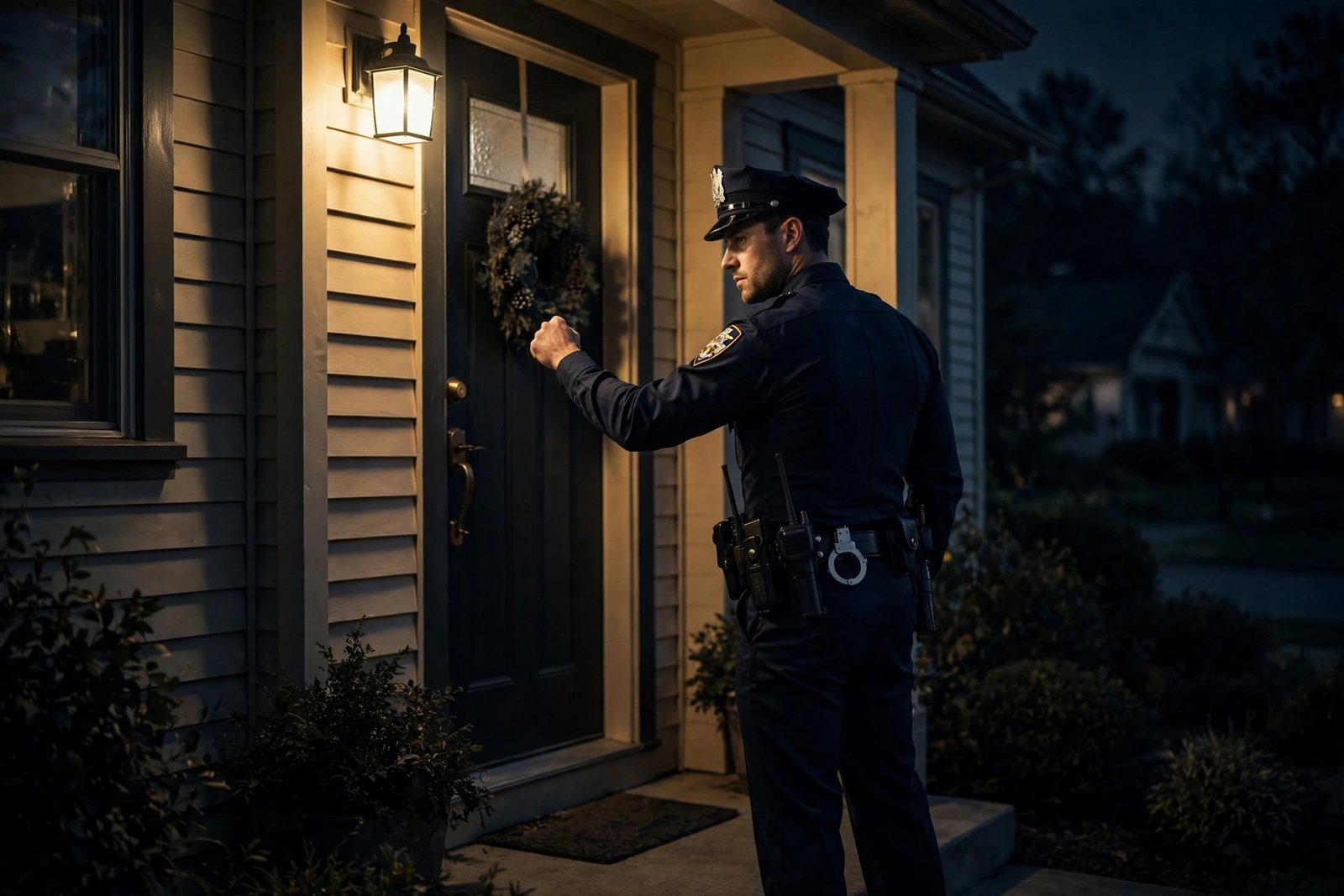
No — as a general rule, police cannot enter your home without a warrant. The home receives the strongest protection under the Fourth Amendment, and the Supreme Court ruled in Payton v. New York that officers need a warrant to enter a home to make a routine arrest.
But “general rule” means there are exceptions, and they matter. Police can enter without a warrant if you consent, if there’s a genuine emergency, or if they’re in hot pursuit of a fleeing suspect, among a few other narrow situations. Knowing these exceptions — and what to do when officers are at your door — is the difference between asserting your rights and accidentally giving them away.
Note: this article covers warrantless entry. No-knock warrants — where police have a warrant but enter without announcing — are a separate topic covered in our dedicated guide.
The General Rule: Police Need a Warrant to Enter Your Home
The Fourth Amendment protects against unreasonable searches, and courts have always treated the home as special. In Payton v. New York (1980), the Supreme Court held that police need a warrant to enter someone’s home to make an arrest, even when they have probable cause.
There are two kinds of warrants that can authorize entry. A search warrant, signed by a judge based on probable cause, lets officers search the home for specified items. An arrest warrant lets officers enter the suspect’s own home to arrest them, as long as they have reason to believe the person is inside. But if the suspect is believed to be in someone else’s home, officers generally need a search warrant for that home too — a rule from Steagald v. United States.
Exception 1: Your Consent
The most common way police enter without a warrant is also the simplest: somebody lets them in. If you voluntarily consent to entry, no warrant is needed.
Key points about consent: it must be truly voluntary, not the result of threats or pressure. You can limit it (“you can look in the living room only”) and you can revoke it (“actually, I’d like you to leave now”) — though anything officers already saw in plain view before you revoked can still be used. Also, a co-occupant like a roommate or spouse can generally consent to a search of shared areas, but if one resident is present and objects, that objection wins over another resident’s consent.
Never feel pressured to say yes. “I do not consent to you entering” is a complete sentence.
Exception 2: Exigent Circumstances and Emergencies
Police can enter without a warrant when there’s a genuine emergency — legally called exigent circumstances. The classic examples:
- Emergency aid: Officers reasonably believe someone inside needs immediate help, like during a medical crisis or ongoing violence. Courts give officers latitude here because waiting for a warrant could cost lives.
- Hot pursuit: Officers chasing a fleeing suspect can follow them into a home without stopping for a warrant.
- Imminent destruction of evidence: If officers reasonably believe evidence is about to be destroyed — hearing toilets flushing and shredders running during a drug raid, for instance — they can enter to prevent it.
Courts judge these situations by what officers reasonably believed in the moment, not with hindsight. But officers can’t manufacture the emergency themselves to create an excuse to enter.
Exception 3: Plain View — With an Important Limit
The plain view doctrine lets officers seize contraband or evidence they can see from a place they’re lawfully allowed to be. If an officer standing on your porch sees illegal drugs through an open window, that observation can support a warrant or an arrest.
But plain view alone does not let officers walk through your front door. They must already be lawfully present — or have another exception — to enter. Seeing something suspicious through a window gives them grounds to get a warrant, not a free pass inside.
What About an Arrest Warrant Alone?
An arrest warrant authorizes police to enter the suspect’s own home to make the arrest, provided they have reason to believe the suspect is there. It does not authorize a full search of the home — though anything illegal in plain view during the arrest can still be seized.
If officers want to enter a third person’s home to arrest someone who doesn’t live there, they need a search warrant for that home, not just the arrest warrant. This distinction trips people up, but it’s well established law.
What to Do If Police Are at Your Door
You don’t have to open the door just because police knock. You can speak through the door or step outside to talk (though stepping outside can change the legal picture, so many lawyers advise talking through the door).
Ask directly: “Do you have a warrant?” If they do, ask to see it — officers with a valid warrant can enter whether you like it or not, and physically resisting will only add charges. If they don’t have one, you can decline entry: “I do not consent to a search of my home.” Be polite but firm. Don’t lie to officers and don’t obstruct them — those are separate crimes. If you believe entry was unlawful, document what happened and call a lawyer; the remedy for an illegal entry is argued in court, not at your doorway.
Key Takeaways
- Police generally need a warrant to enter your home — it’s the most protected place under the Fourth Amendment.
- Your voluntary consent is the most common exception; you can refuse, limit, or revoke it.
- Genuine emergencies, hot pursuit, and imminent destruction of evidence also allow warrantless entry.
- Plain view lets officers seize what they see lawfully, but it doesn’t authorize entry by itself.
- An arrest warrant covers entry into the suspect’s own home, not someone else’s.
- You don’t have to open the door; ask if they have a warrant and clearly refuse consent if they don’t.
Frequently Asked Questions
Can police enter my home if the door is open? An open door alone doesn’t authorize entry. Officers still need a warrant or an exception like consent or exigent circumstances. However, anything visible through the open door is in plain view and can support getting a warrant.
Can police chase a suspect into my house? Yes. Hot pursuit of a fleeing suspect is a recognized exception. If officers are actively chasing someone and that person runs into a home, they can follow without a warrant.
What if I consented and then changed my mind? You can revoke consent at any time by clearly telling officers to leave. They must stop searching new areas, though evidence they already observed lawfully can still be used.
Does this apply to my garage, porch, or yard? Partially. The area immediately around your home — called curtilage — gets similar protection to the home itself. But what officers can see from public areas or places visitors normally go, like your front walkway, is fair game.
Can police enter if they say they smell marijuana? It depends on the state and circumstances. In some places the odor of drugs can contribute to exigent circumstances; in states where marijuana is legal, courts have limited this justification. This is a fast-changing area of law — ask a local attorney.
Should I open the door when police knock? You’re not legally required to open the door for a knock. Many attorneys advise speaking through the door, asking whether they have a warrant, and declining consent to entry if they don’t. Stay calm and polite throughout.
This article is for general information only and is not legal advice.