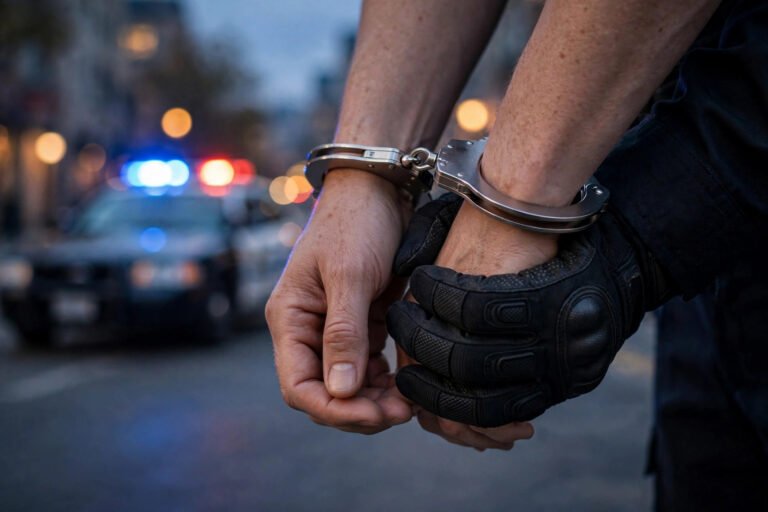
How Long Can Police Detain You During a Traffic Stop?

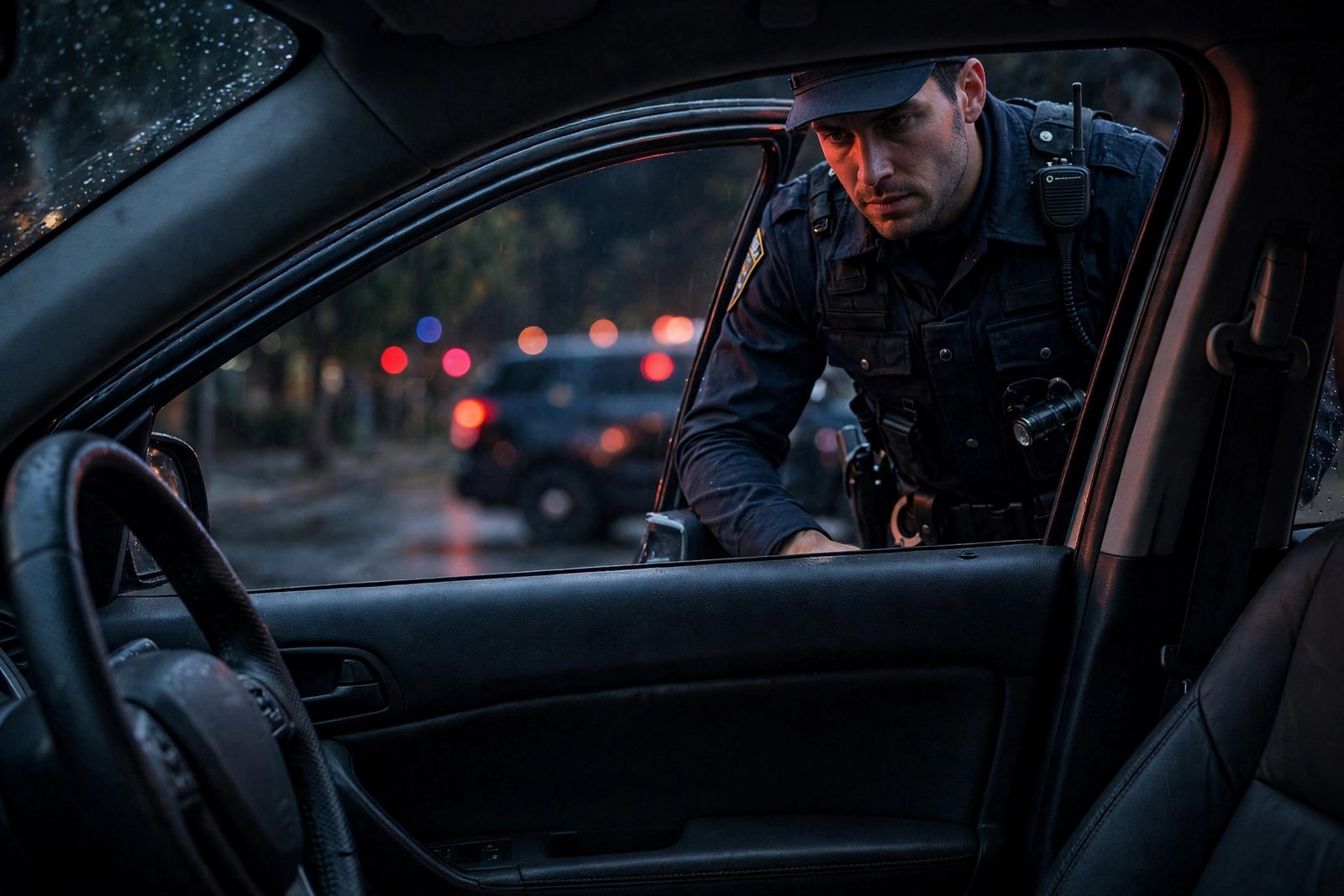
Police can detain you during a traffic stop only as long as reasonably necessary to address the reason for the stop — checking your license, running a records check, and writing a ticket or warning. Once those tasks are done, the stop should end.
That rule comes from the Supreme Court’s decision in Rodriguez v. United States (2015), and it’s one of the most important limits on traffic stops. An officer can’t stretch a routine stop into a fishing expedition — keeping you waiting while a drug dog is brought in, for example — unless something during the stop gives them reasonable suspicion of another crime.
The Rodriguez Rule: A Traffic Stop Has a “Mission”
In Rodriguez v. United States, the Supreme Court held that a traffic stop’s authority ends when the tasks tied to the traffic violation are — or reasonably should have been — completed. In that case, an officer finished writing a warning ticket and then made the driver wait several more minutes for a K-9 unit to arrive. The Court ruled the extended detention unconstitutional because the officer had no reasonable suspicion of anything beyond the traffic violation.
The principle is simple: a traffic stop is a seizure, and seizures must be reasonable in both how they start and how long they last. Extending a stop beyond its mission, even by a few minutes, needs its own legal justification.
What Counts as Part of the Stop’s “Mission”?
Courts recognize certain tasks as ordinary parts of a traffic stop’s mission:
- Checking your driver’s license, registration, and insurance
- Running a check for outstanding warrants
- Inspecting the vehicle’s condition and registration status
- Writing a ticket or warning
These are the things an officer is expected to do, and the time they reasonably take is lawful. A stop that takes 15–20 minutes for these tasks is generally uncontroversial. What matters isn’t a fixed number of minutes — it’s whether the time was spent on the stop’s legitimate business.
When Can an Officer Legally Extend the Stop?
An officer can extend a stop if, during its ordinary course, they develop reasonable suspicion of a separate crime. Examples courts have accepted include the smell of alcohol or drugs, visible contraband, wildly inconsistent answers to basic questions, or a passenger’s behavior suggesting something criminal.
The key is that the new suspicion must arise during the stop itself — it can’t be manufactured by deliberately dragging things out to go looking for it. And once reasonable suspicion exists, the officer can investigate that new suspicion, which may include calling for a K-9 unit or asking more questions.
What Counts as an Unreasonable Delay?
Unreasonable extension looks like this: the ticket is written, the license is back in your hand, and you’re still sitting there waiting while the officer asks unrelated questions or stalls for a drug dog — with no new reason to suspect anything. That’s exactly what Rodriguez struck down.
Gray areas exist. Some courts tolerate tiny, incidental delays — a minute or two of unrelated questioning that doesn’t actually prolong the stop. But deliberately holding you past the point when the stop’s business is finished, without new reasonable suspicion, crosses the line. Technology matters too: if a records check takes unusually long for no good reason, that can become part of the analysis.
What Should You Do If a Stop Drags On?
First, stay calm and polite — never argue the law on the roadside. You can ask, “Am I free to leave?” or “Is the stop over?” These questions are perfectly legal and they create a clear record of the encounter. You don’t have to answer unrelated investigative questions, though drivers must provide license, registration, and insurance.
Don’t physically resist or drive off; that creates new legal problems regardless of whether the stop was lawful. Instead, note the time, remember details, and if you believe your rights were violated, talk to a criminal defense attorney afterward. Evidence found during an unlawfully extended stop can potentially be thrown out of court under the exclusionary rule.
Key Takeaways
- A traffic stop may last only as long as needed to address the violation — checking documents and issuing a ticket or warning.
- Under Rodriguez v. United States, extending a stop beyond that point requires reasonable suspicion of another crime.
- Officers can’t make you wait for a drug dog after the ticket is done unless new suspicion arose.
- There’s no fixed minute limit; courts look at whether the time served the stop’s mission.
- Ask “Am I free to leave?” to clarify the situation — it’s legal and creates a record.
- Never argue or resist on the roadside; challenge an unlawful stop later with a lawyer.
Frequently Asked Questions
How long does a normal traffic stop take? Most routine stops take about 10–20 minutes for the officer to check your documents, run records, and write a ticket or warning. That’s considered reasonable as long as the time is spent on the stop’s legitimate tasks.
Can police make me wait for a drug dog? Not without reasonable suspicion. Under Rodriguez, bringing in a K-9 after the stop’s business is finished — just to go fishing — unreasonably extends the detention. If the sniff happens during the stop without adding time, courts treat that differently.
What if the officer is just slow writing the ticket? Reasonable diligence is what matters. An officer working steadily through the stop’s tasks isn’t violating your rights even if it takes a while. Problems arise when the delay comes from unrelated investigation or deliberate stalling.
Does an officer asking me questions extend the stop? It can, if the questioning goes beyond the stop’s mission and prolongs the detention. Brief, ordinary questions during document checks are fine; an extended interrogation about unrelated matters after the ticket is ready is not.
Can I just drive away if the officer walks back to the cruiser? No — don’t do that. Leaving before the officer clearly ends the stop can lead to charges like fleeing or eluding. Wait until you’re told you’re free to go or it’s unmistakable the encounter is over.
What happens to evidence found during an illegally extended stop? It may be suppressed — meaning the prosecution can’t use it — under the exclusionary rule. Whether suppression applies depends on the facts, which is why documenting the timeline and consulting an attorney matters.
This article is for general information only and is not legal advice.