Can You Refuse a Field Sobriety Test?

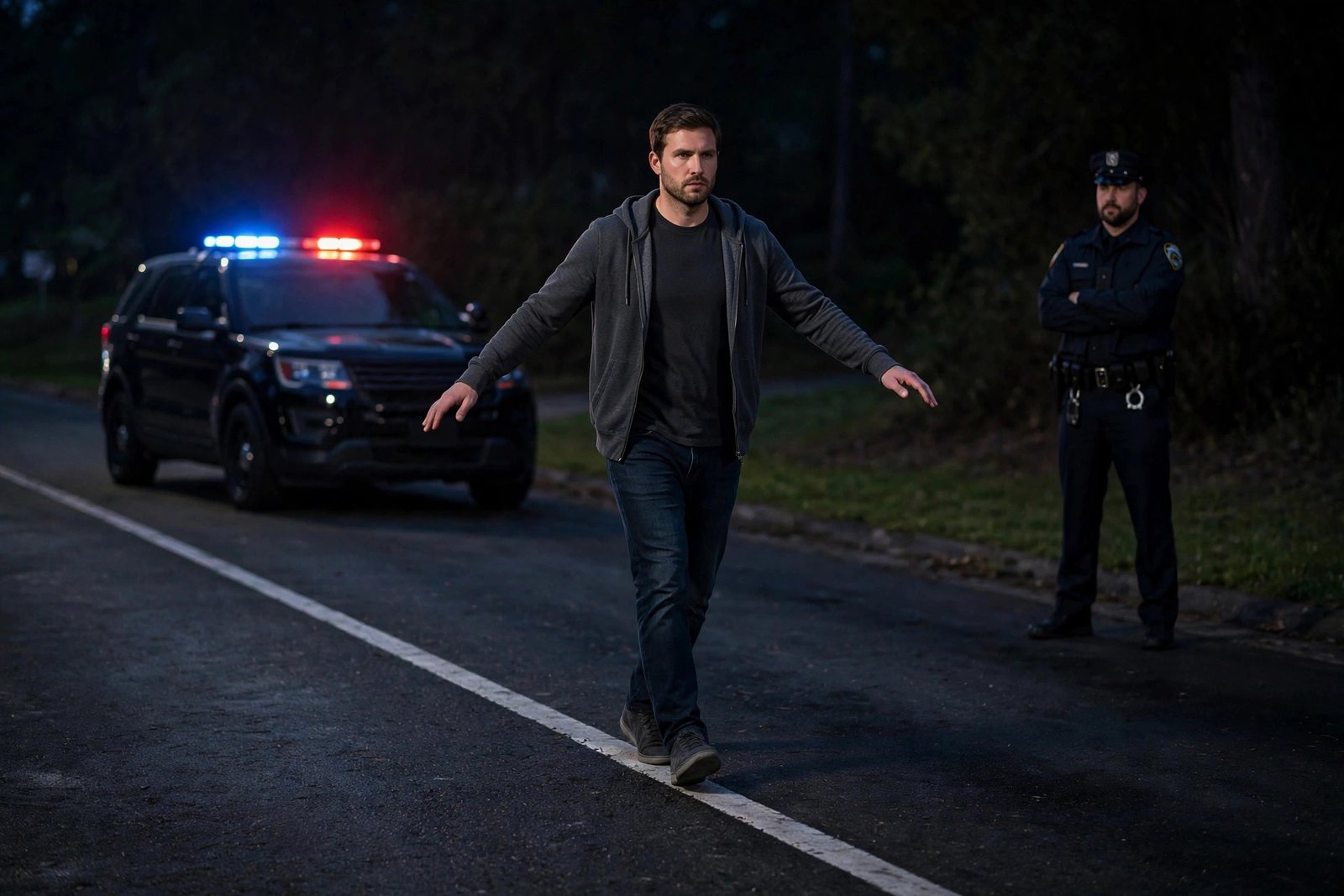
Yes — in most states, you can refuse a field sobriety test. The roadside tests officers ask you to perform during a DUI investigation (walk-and-turn, one-leg stand, eye tracking) are generally voluntary before arrest, and there is no automatic license suspension for declining them the way there is for refusing a post-arrest chemical test.
That said, refusal is not a magic shield. An officer can still arrest you based on everything else they’ve observed — the smell of alcohol, slurred speech, or your driving itself. Understanding the difference between field sobriety tests and chemical tests is essential, because the law treats them very differently.
What Are Field Sobriety Tests?
Field sobriety tests (FSTs) are the physical tasks an officer asks you to perform on the roadside when they suspect impaired driving. The three standardized tests developed with federal traffic safety researchers are:
- Horizontal gaze nystagmus (HGN): Following a pen or light with your eyes while the officer watches for involuntary jerking of the eyeball.
- Walk-and-turn: Taking nine heel-to-toe steps along a line, turning, and walking back — testing balance and the ability to follow instructions.
- One-leg stand: Standing on one foot for about 30 seconds while counting aloud.
Officers score “clues” of impairment during each test. These are screening tools, not precise measurements — unlike a breathalyzer, they don’t produce a blood alcohol number.
Are Field Sobriety Tests Voluntary?
In most states, yes. Roadside FSTs given before an arrest are considered voluntary, and you can politely decline them. Crucially, the implied-consent laws that punish test refusal with automatic license suspension apply to post-arrest chemical tests (breath, blood, or urine) — not to roadside field sobriety tests in most states.
This is the distinction that confuses people most: refusing the roadside obstacle course generally carries no statutory penalty, while refusing the breathalyzer at the station after you’re arrested can cost you your license for months. A few states blur this line, so check your own state’s law — but the general rule holds across most of the country.
Field Sobriety Tests vs. Breathalyzer Tests: The Crucial Difference
Think of it as two separate stages. Stage one is the roadside investigation: the officer’s observations plus any field sobriety tests, all aimed at deciding whether there’s probable cause to arrest you for DUI. Stage two begins after arrest: the officer requests a chemical test of your breath, blood, or urine to measure alcohol concentration.
Implied-consent penalties — license suspension, fines, sometimes ignition interlock requirements — attach to refusing stage two, the chemical test. They do not attach to refusing stage one, the field sobriety tests, in most states. Our separate guide on refusing a breathalyzer test covers the chemical-test side in detail.
What Happens If You Refuse the FSTs?
The officer makes the arrest decision without the test results, based on everything else: how you were driving, the odor of alcohol, your speech and appearance, and any admissions you made. Refusing the tests doesn’t prevent an arrest if the officer already has enough observations.
A few practical consequences to know: the officer will note your refusal in the police report, and in some states prosecutors can mention the refusal at trial as possible consciousness of guilt — though many defense attorneys argue refusal simply shows you knew the tests were voluntary. Refusal also deprives the prosecution of potentially shaky test evidence, which is exactly why some lawyers advise declining: even sober people fail these tests under stress, on uneven roadsides, in bad weather, or with injuries and medical conditions.
State-by-State Variation
DUI law is state law, and details vary. A small number of states treat FST refusal differently or have administrative consequences tied to the broader DUI stop. Some states’ implied-consent advisories are read at the roadside and can confuse drivers about which tests are truly optional. Age matters too — drivers under 21 face zero-tolerance rules with lower thresholds in every state.
Because the stakes include your license and possibly jail time, treat this article as background education and confirm the specifics with a DUI attorney in your state if you’re ever in this situation.
Should You Refuse? Practical Considerations
There’s no one-size answer, but consider this: field sobriety tests are designed to produce clues, and they’re difficult even for sober people — try standing on one leg for 30 seconds on a dark, sloped roadside while a police officer watches. Many defense lawyers advise politely declining, on the theory that you shouldn’t hand the state evidence against yourself.
If you decline, do it politely and clearly: “Officer, I understand these tests are voluntary, and I choose not to perform them.” Don’t argue, don’t get cute, and don’t lie about drinking — dishonesty hurts you more than silence. Provide your license, registration, and insurance as required, and if arrested, ask for a lawyer before answering questions or deciding on the chemical test.
Key Takeaways
- In most states, roadside field sobriety tests are voluntary — you can decline them.
- Implied-consent penalties (like license suspension) apply to post-arrest chemical tests, not roadside FSTs in most states.
- Refusing FSTs doesn’t prevent arrest if the officer has other observations supporting probable cause.
- The three standardized tests are HGN, walk-and-turn, and one-leg stand — all subjective screenings, not BAC measurements.
- Even sober people fail FSTs due to nerves, weather, road conditions, or medical issues.
- Decline politely if you choose to; never argue, lie, or obstruct on the roadside.
Frequently Asked Questions
Can I be arrested just for refusing field sobriety tests? No — refusal alone isn’t a crime and doesn’t create probable cause by itself. But the officer can still arrest you based on other evidence of impairment they already observed.
Will refusing keep me out of jail? Not necessarily. If the officer has enough observations — erratic driving, odor of alcohol, slurred speech — they can arrest you without any test results. Refusal mainly keeps subjective test “clues” out of the evidence.
How accurate are field sobriety tests? They’re screening tools, not scientific measurements. Federal research found the three-test battery reasonably predictive when administered perfectly, but real roadside conditions — darkness, weather, nerves, footwear, injuries — reduce reliability significantly.
Do I have to do FSTs at a DUI checkpoint? The same voluntariness principles generally apply at checkpoints. You must stop and provide documents as directed, but the roadside physical tests remain voluntary in most states.
What’s the difference between a field sobriety test and a breathalyzer, again? FSTs are officer-observed physical tasks done roadside before arrest; a breathalyzer is a chemical test measuring blood alcohol, usually given after arrest, and refusing it triggers implied-consent penalties in most states.
Can my refusal be used against me in court? In some states, yes — prosecutors may argue refusal suggests consciousness of guilt. In others, its use is limited. A local DUI attorney can tell you how your state treats it.
This article is for general information only and is not legal advice.