Can Police Tow Your Car? Rules Explained

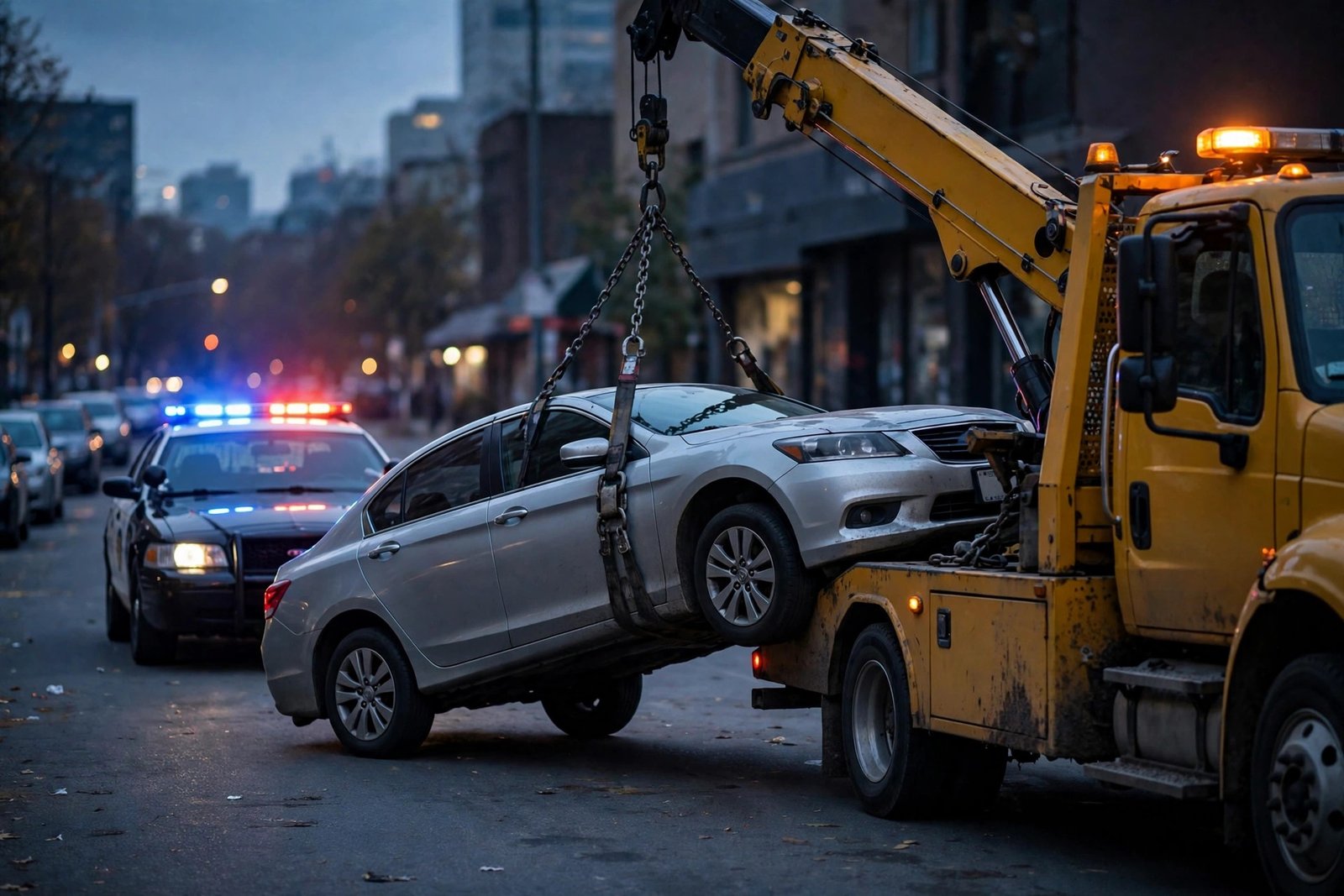
Yes. Police can order your car towed in many situations, including illegal parking, a DUI arrest, a crash that leaves the vehicle undriveable, or when the car is abandoned or reported stolen. The exact rules vary by state and department, but officers generally need a lawful reason — they cannot tow your car just because they feel like it.
Common Reasons Police Can Order a Tow
Officers don’t tow cars at random. A police-ordered tow usually happens for one of these reasons:
- Illegal parking. Blocking a fire hydrant, a driveway, a crosswalk, or a lane of traffic can get your car towed on the spot. Parking in a tow-away zone, an expired meter in some cities, or blocking a bus stop or handicap space are common triggers.
- DUI arrest. If you’re arrested for driving under the influence, police will almost always tow your vehicle. You can’t legally drive it, and leaving it on the roadside is a hazard.
- Driver arrested. When the driver is taken into custody for any reason and no licensed driver is available to move the car, officers typically call a tow.
- Abandoned vehicles. A car left on public property for an extended period — often 48 to 72 hours, depending on local law — can be tagged and eventually towed.
- Accident scenes. If your car is wrecked or blocking the road after a crash, police will have it towed so the scene can be cleared.
- Stolen vehicle recovery. When police recover a stolen car, they usually tow it to a secure lot rather than leaving it where it was found.
What Happens During a Police-Ordered Tow
When an officer orders a tow, a contracted tow company — often from a police rotation list — responds to the scene. Before the car is taken, officers typically conduct an inventory search: a documented check of the vehicle’s contents to record valuables and protect the department from later claims of theft or damage.
An inventory search is not the same as an investigative search. Officers are listing what’s in the car, not digging for evidence, though anything illegal found in plain view or during the inventory can still be used against you.
Your Rights When Your Car Is Towed
- You must be able to find out where your car went. Departments are required to log tows, and most have a non-emergency number or online lookup for towed vehicles.
- You’re entitled to notice. If your car is towed as abandoned or from certain locations, the registered owner generally must receive written notice before the vehicle can be sold or scrapped.
- Fees must be reasonable and documented. Tow companies on police rotation are usually bound by contracted rates. You have the right to an itemized bill.
- You can retrieve personal property. Even if you can’t pay the full tow bill right away, most jurisdictions let you collect essential personal belongings — like a wallet, medication, or work tools — from the vehicle.
How Much Does a Police Tow Cost?
Costs vary widely by city and situation, but a typical police-ordered tow runs $150 to $350 for the hookup, plus $25 to $75 per day in storage fees. After-hours releases, oversized vehicles, and accident-scene cleanups can push the total higher. Because storage fees accumulate daily, retrieving your car quickly saves real money.
Getting Your Car Back
The process is usually straightforward:
- Find out which tow lot has your car (call the police non-emergency line).
- Bring a valid photo ID and proof of ownership or registration.
- If the car isn’t registered to you, bring the registered owner or written authorization.
- Pay the tow and storage fees.
If your car was towed after an arrest or as part of an investigation, it may be held as evidence. In that case, you’ll need a release from the investigating agency before the lot will let it go.
Can You Dispute a Tow?
Yes. If you believe the tow was unjustified — for example, your car was legally parked, or proper notice wasn’t given — you can challenge it. Most cities have a tow hearing process through the police department, a hearing officer, or small claims court. Bring photos of where the car was parked, receipts, and any relevant paperwork. If the tow is found improper, you may recover the fees you paid.
Key Takeaways
- Police can tow your car for illegal parking, DUI or other arrests, crashes, abandonment, or stolen-vehicle recovery.
- Officers need a lawful reason, and the tow must be logged so you can locate your vehicle.
- Expect $150–$350 for the tow plus daily storage fees that add up fast.
- You have the right to notice, an itemized bill, and retrieval of personal belongings.
- Wrongful tows can be challenged through a tow hearing or small claims court.
Frequently Asked Questions
Can police tow your car without warning? Sometimes. A car blocking a hydrant or sitting in a tow-away zone can be towed immediately. Abandoned vehicles usually get a warning tag first, with a set number of days before the tow.
Can police tow your car from private property? Generally, police won’t tow from private property unless the vehicle is stolen, involved in a crime, or the property owner requests it. Driveways and private lots are mostly handled between owners and private tow companies, following state law.
Can police search your car before towing it? Officers typically perform an inventory search to document the car’s contents. This is an administrative procedure, not an evidence search, but contraband found during it can lead to charges.
What if I get to my car before the tow truck arrives? In many places, if you’re present, licensed, and able to move the car legally, the officer may let you drive it away — sometimes with a ticket instead of a tow. This isn’t guaranteed and depends on the situation and local policy.
How long until an unclaimed towed car is sold? It varies by state, but unclaimed vehicles are often eligible for lien sale or auction after about 30 days. The registered owner must be notified before that happens.