How to Become a Police Officer in New York?

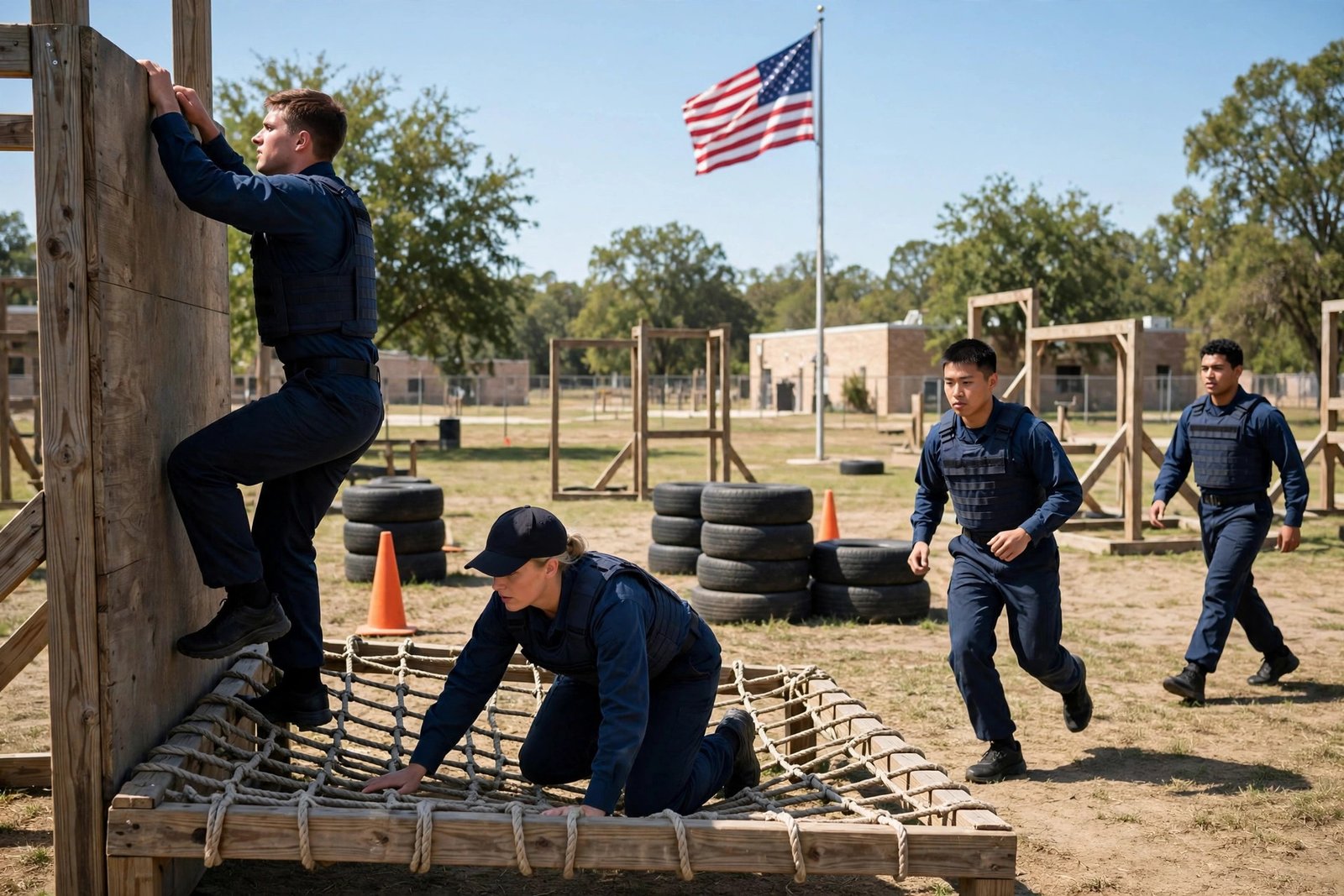
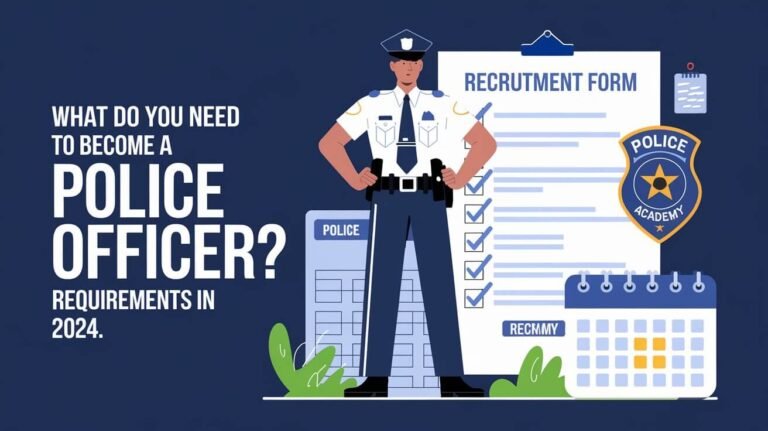
There are two main paths to becoming a police officer in New York: joining the NYPD through the city’s civil service process, or joining the New York State Police (or a county/upstate department) through separate exams and academies. Both require a written exam, physical fitness test, medical and psychological screening, background investigation, and academy training. The full process typically takes 12 to 24 months from exam to academy graduation.
Path 1: Joining the NYPD
The NYPD is the largest police department in the United States, hiring thousands of officers each year. Here’s the process in order:
1. Take the Police Officer Civil Service Exam
The NYPD hires from a civil service list. You must first pass the written Police Officer exam, offered periodically by the NYC Department of Citywide Administrative Services (DCAS). Your score determines your rank on the eligibility list — higher scores get called first.
2. Meet the Basic Requirements
To be appointed, you must:
- Be at least 21 years old at the time of appointment (you can take the exam at a younger age)
- Be a US citizen
- Have a valid New York driver’s license
- Have earned 60 college credits with at least a 2.0 GPA, or have served 2 years of full-time active military duty
- Live in New York City or surrounding counties (residency rules apply at appointment)
3. Pass the Physical Fitness Test
The NYPD uses a job-standard physical test measuring the strength, endurance, and agility needed for police work. Train well in advance — this eliminates a significant number of candidates.
4. Complete Medical and Psychological Screening
A thorough medical exam ensures you meet the department’s health standards, and a psychological evaluation by a licensed professional assesses suitability for law enforcement.
5. Pass the Background Investigation
Investigators will verify your education, employment, criminal history, driving record, finances, and character references. Be completely honest — discrepancies or omissions are among the top reasons candidates are disqualified.
6. Graduate the Police Academy
NYPD academy training runs about six months at the Police Academy in Queens. Recruits study law, procedures, firearms, defensive tactics, and emergency vehicle operations, and are paid a salary while training.
Path 2: New York State Police
Prefer statewide jurisdiction and the trooper tradition? The New York State Police run their own process:
- Trooper Entrance Exam: A competitive written exam, offered every few years. High scores are essential — thousands compete for a few hundred spots.
- Requirements: Similar to NYPD — 21+ at appointment, US citizenship, high school diploma or equivalent (college credits strengthen your application), valid license, and state residency requirements.
- Academy: About six months of residential training at the State Police Academy in Albany — one of the most demanding basic schools in the country.
- Assignment: Unlike NYPD officers, troopers can be assigned anywhere in the state, from Long Island to the Canadian border.
Other Departments: County Sheriff and Local Agencies
New York has hundreds of other law enforcement employers — county sheriff’s offices, city departments (Buffalo, Rochester, Syracuse, Albany, Yonkers), and specialized agencies like the MTA Police and Port Authority Police. Most use county civil service exams with requirements similar to the NYPD’s, though smaller departments may have different education standards and shorter hiring timelines. Don’t overlook these — competition is lighter and the work is just as real.
Typical Hiring Timeline
| Stage | Approximate Time | |—|—| | Written exam to list | 1–3 months | | Called for processing | 3–12 months after exam | | Medical, psych, background | 3–6 months | | Academy | ~6 months | | Total | 12–24 months |
Timelines vary with hiring needs and how quickly you complete each step. Stay responsive to investigator requests — delays on your end slow everything down.
Tips to Improve Your Chances
- Score high on the exam. In civil service hiring, your list number is everything. Study guides and practice tests are worth the investment.
- Get in shape early. Don’t wait until you’re called to start training for the physical test.
- Keep your record clean. Avoid legal trouble, drive responsibly, and manage your finances — all three are scrutinized.
- Earn the college credits. The 60-credit requirement trips up many NYPD applicants. Community college credits count.
- Be honest about everything. The background investigation will find what you hide. Candor about past mistakes beats getting caught minimizing them.
- Consider military service. Veterans receive civil service preference points and the service can substitute for college credits.
Key Takeaways
- Two main paths: NYPD (civil service exam, 60 college credits or 2 years military, ~6-month academy) and NY State Police (trooper exam, Albany academy, statewide assignment).
- County sheriff and local departments offer additional options with lighter competition.
- Expect 12–24 months from exam to graduation.
- Exam score, fitness, clean background, and honesty are the deciding factors.
Frequently Asked Questions
How old do you have to be to become a police officer in New York? You must be at least 21 at the time of appointment for both NYPD and State Police. You can take the exams before turning 21.
Do you need a college degree to join the NYPD? Not a full degree — 60 college credits with a 2.0 GPA, or 2 years of full-time active military service, satisfies the education requirement.
How long is the NYPD academy? Approximately six months of full-time training, and recruits are paid during it.
Is it hard to get hired by the NYPD? It’s competitive but very achievable. Thousands are hired each year. The biggest filters are the exam score (which determines your list rank), the physical test, and the background investigation.
Can I become a New York police officer with no prior law enforcement experience? Yes. The vast majority of recruits have no prior law enforcement background — the academy is designed to train civilians from scratch.