Can Police Search Your Backpack Without a Warrant?

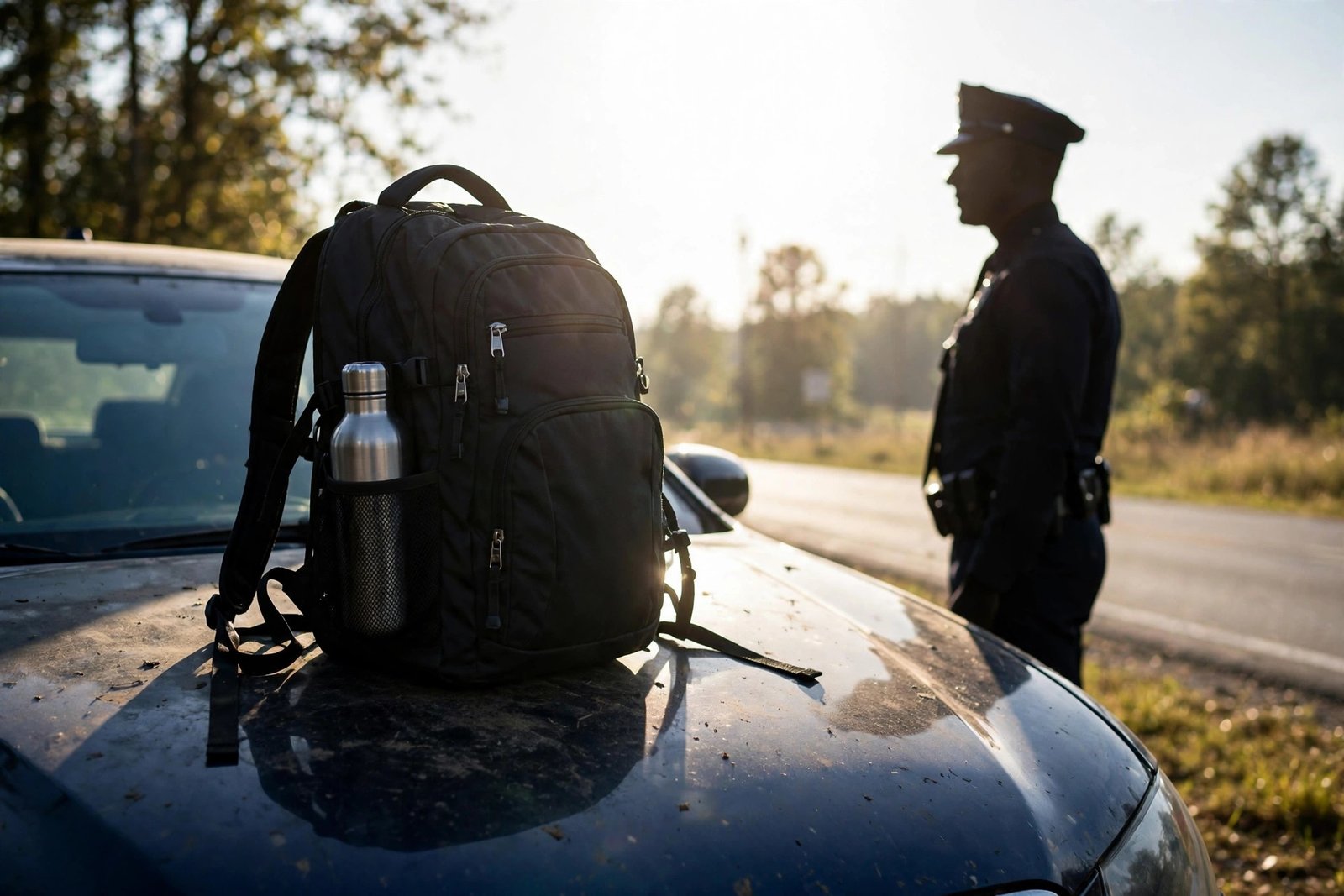
Generally, no — police need a warrant, your consent, or a recognized legal exception to search your backpack. Courts treat backpacks, purses, and luggage as “closed containers” that carry a strong expectation of privacy. But several important exceptions — arrests, vehicles, schools, and borders — can allow a warrantless search depending on the circumstances.
The Quick Answer
- Default rule: Police need a warrant or your voluntary consent to search your backpack.
- Your backpack is a “closed container” with strong Fourth Amendment protection, similar to luggage.
- Major exceptions: search incident to arrest, the vehicle exception with probable cause, inventory searches, school searches, and border crossings.
- You can refuse consent — and that refusal can’t be used against you.
Why Backpacks Get Strong Privacy Protection
The Fourth Amendment protects against unreasonable searches where you have a reasonable expectation of privacy. Courts have consistently held that closed containers — suitcases, purses, backpacks — qualify because they hide personal belongings from public view.
This principle runs through several Supreme Court decisions:
- In United States v. Ross (1982), the Court held that a warrant to search a car extends to closed containers inside it — but also confirmed containers themselves are protected spaces.
- In California v. Acevedo (1991), the Court clarified the rules for containers in vehicles, still requiring probable cause.
- Lower courts routinely apply the same logic to backpacks carried on your person: officers can’t just open one because they’re curious.
In plain terms: your backpack is legally closer to your home than to your pocket — police need a real justification to look inside.
When Police CAN Search Your Backpack Without a Warrant
1. You consent
The most common way backpacks get searched: the owner says yes. Consent must be voluntary — not the result of threats or false claims of authority. You have the right to refuse, and officers are not required to tell you that (though many people don’t realize it).
- Tip: “I do not consent to searches” is a complete sentence. Say it calmly and clearly.
2. Search incident to a lawful arrest
If you’re lawfully arrested, police can search your person and containers within your immediate control for weapons or evidence. But this power has limits — in Arizona v. Gant (2009), the Supreme Court restricted vehicle searches incident to arrest, and courts apply similar reasoning to containers: the search must be tied to officer safety or preserving evidence related to the arrest.
3. Probable cause plus the vehicle exception
If your backpack is in a car and officers have probable cause to believe it contains contraband or evidence of a crime, the automobile exception generally lets them search it without a warrant. Cars are treated differently because they’re mobile — evidence could drive away before a warrant arrives.
4. Inventory searches
When police impound a car or book you into jail, they may inventory your belongings — including a backpack — under standardized department procedures. These aren’t supposed to be fishing expeditions, but they do allow warrantless inspection.
5. School searches
Students have reduced privacy rights at school. Under New Jersey v. T.L.O. (1985), school officials (and school resource officers acting with them) need only reasonable suspicion — not probable cause or a warrant — to search a student’s backpack. Regular police acting independently at a school are generally held to the normal probable cause standard, though the lines can blur.
6. Border and airport security
At international borders and TSA checkpoints, routine searches — including of bags and backpacks — generally don’t require warrants or suspicion under the border search doctrine.
What To Do If Police Want to Search Your Backpack
- Ask if you’re free to leave. If yes, you can walk away with your bag.
- Clearly refuse consent if you don’t want the search: “Officer, I do not consent to a search of my backpack.”
- Don’t physically resist. If officers search anyway, don’t block them — that can lead to obstruction charges. State your objection verbally and challenge the search later in court.
- Ask for the basis. “What is your probable cause?” or “Am I under arrest?” Officers don’t always have to answer, but asking creates a record.
- Stay silent about contents. You don’t have to explain what’s inside. Anything you say can be used as evidence.
- Get a lawyer if anything is found or you’re arrested.
Key Takeaways
- Backpacks are “closed containers” with strong Fourth Amendment protection.
- Police generally need a warrant or your consent to search one.
- Exceptions include arrest, probable cause in vehicles, inventory searches, schools, and borders.
- Consent must be voluntary — and you can always say no.
- Never physically resist a search; object verbally and fight it in court.
Frequently Asked Questions
Can police search my backpack during a traffic stop? Not automatically. A traffic stop alone doesn’t justify searching your backpack. Officers need consent, probable cause connecting the bag to a crime, or another exception. They also can’t extend the stop just to fish for a reason to search.
What about a purse or gym bag? The same rules apply. Courts treat all closed personal containers similarly — the label on the bag doesn’t change the analysis.
Can a school resource officer search my child’s backpack? School officials need only reasonable suspicion of a rule or law violation under T.L.O. — a much lower bar than the probable cause police need on the street. Policies vary by district, so check your school’s handbook.
If police have a warrant for my car, can they open my backpack inside it? Generally yes. Under United States v. Ross, a warrant authorizing a vehicle search extends to closed containers inside the vehicle that could hold the object of the search.
Does refusing consent make me look guilty? Legally, no. Courts have held that asserting your Fourth Amendment rights cannot be used as evidence of guilt or as a basis for probable cause. Practically, stay polite — “I don’t consent” is enough.
Can police use a drug dog on my backpack? A dog sniff of the exterior of your bag in a public place is generally not considered a “search” under Illinois v. Caballes (2005). If the dog alerts, that alert typically provides probable cause to open the bag.
This article is for general information only and is not legal advice.